During the session, we will audit the "Triggers" and "Logic Gates" currently living in your Microsoft environment—from SharePoint workflows to legacy scripts—and map their direct Zenphi equivalent. You will leave the call with a visual blueprint of your new Google-native architecture, ensuring no institutional logic is "lost in translation".
We will analyze your current setup to identify "Red Flag" processes—complex legacy flows or cross-tenant dependencies that are at the highest risk of breaking during the cutover.
Discuss how to leverage Zenphi’s native actions to automate User Lifecycle Management and Shared Drive Governance. We will review how Zenphi maintains institutional visibility with centralized audit logs and Role-Based Access Control
Learn how to procure Zenphi via the Google Cloud Marketplace. We will show you how to utilize your existing GCP committed spend to fund your automation roadmap and consolidate your billing onto a single Google invoice.
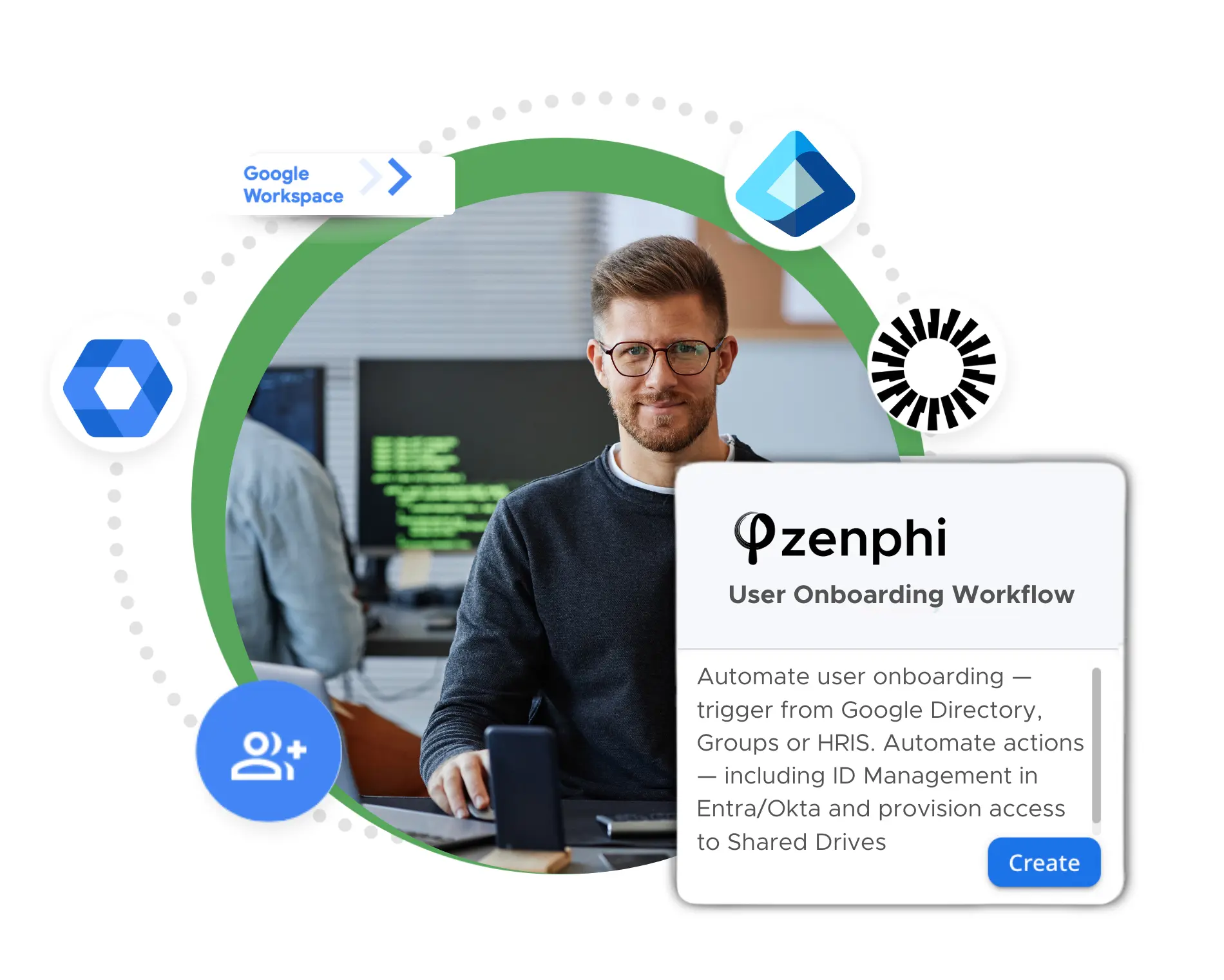
Zenphi has pre-built integrations with Entra ID (Azure AD), Okta, and native access to and Google Directory actions. During migration, you can maintain your existing identity source while automating user access management and Shared Drive permissions through Zenphi’s actions.
This is the primary “Logic Gap” Zenphi solves. We replace SharePoint’s relational lists and multi-stage workflows with Google Sheets, Tables, and Zenphi’s long-running state machines. During our Migration Audit, we help you map these dependencies to ensure functional parity on Day 1.

Yes. Zenphi is available via the Google Cloud Marketplace. This allows you to draw down on your GCP committed spend, consolidate your billing, and bypass the need for a new vendor onboarding cycle.
Zenphi provides a centralized admin console. IT administrators can use RBAC to govern who can build or deploy workflows and access permanent, searchable audit logs for every process execution.