
Five approval workflows are especially well suited to Google Workspace automation: supplier invoices, expense reimbursements, sales quotes, multi-stage document reviews, and employee leave requests. Each can start from a familiar Google Workspace event, route the request to the right person, handle reminders and exceptions, record the result, and continue automatically into the next business step.
What’s in this guide
What is a Google Workspace approval workflow?
An approval workflow is the structured process around a business decision. It defines how a request enters the organization, who needs to review it, which rules determine the approval path, what happens after approval or rejection, and how the outcome is recorded.
For organizations already using Google Workspace, many of the ingredients are already familiar: a request can begin in Google Forms or Gmail, data can be stored in Sheets, documents can live in Drive, managers can be identified from Google Directory, and notifications can go through Gmail. The missing layer is usually the workflow logic that connects those tools and keeps the process moving.
That is where approval workflow automation becomes useful. Instead of asking employees to manually coordinate every handoff, the workflow handles routing, reminders, decisions, follow-up actions, and the audit trail.
A useful approval workflow does more than send an approval email
Use employee, department, amount, request type, or Google Directory data instead of hard-coding one approver into the process.
Real workflows need comments, rework loops, escalation, reminders, parallel review, exceptions, and conditional approval paths.
An approval should trigger the next business action: finance processing, document generation, status updates, Drive filing, Gmail configuration, or another workflow step.
Request data, decisions, comments, timestamps, status, and exceptions should remain visible without reconstructing the history from inboxes.
Where a direct template link is available, you can launch it from the relevant section below. If a direct link no longer opens the template automatically, open the Zenphi Designer, start a new workflow, choose Start with a Template, and search for the relevant template.
Invoice approval workflow
Gmail intake → reviewer lookup → approval → finance processing
Supplier invoices are a good example of why approval automation matters. The invoice often arrives by email, but somebody still has to identify the responsible reviewer, forward the attachment, wait for a response, chase a delay, and tell Finance when the invoice is ready for processing.
In the Zenphi template, Gmail acts as the intake point while a Google Sheets table provides the routing data. The workflow then handles the approval and moves the invoice into the next finance step.
The workflow detects an incoming invoice email and captures the relevant message and attachment information.
Use a Google Sheets lookup or other business rule to determine who is responsible for reviewing the invoice.
The reviewer receives the invoice and the approval task without someone manually forwarding it.
Once approved, the workflow moves the invoice into the next processing stage and can notify the relevant stakeholders.
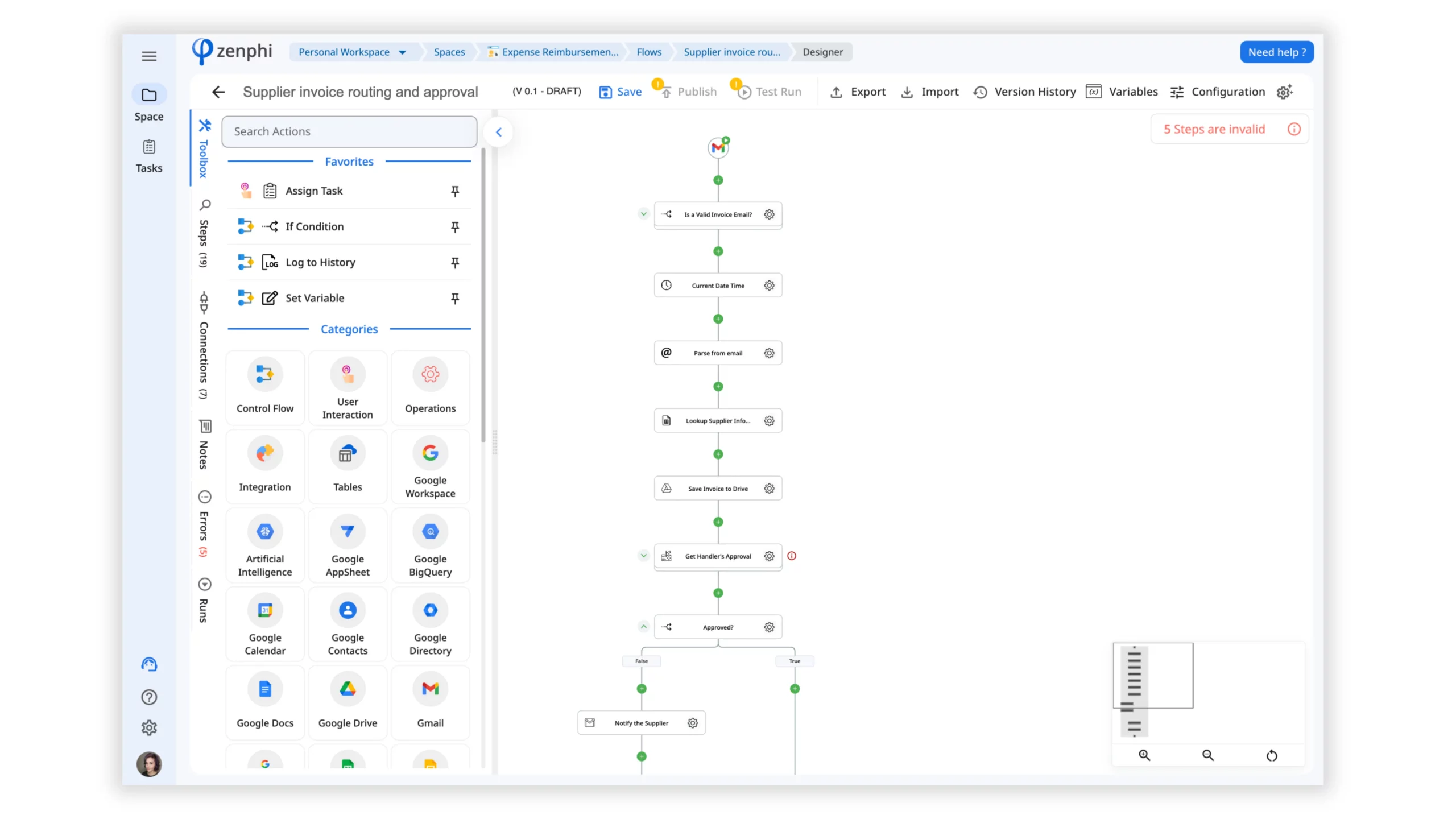
Includes the automated workflow and pre-built approval tasks so the routing and approval structure can be customized rather than built from zero.
If the link doesn’t launch it: Zenphi Designer → new workflow → Start with a Template → search for the invoice approval template.
Expense reimbursement approval workflow
Employee claim → manager approval → Finance → employee notification
Expense reimbursement combines a structured request, supporting documents, manager approval, finance processing, and communication back to the employee. A Google Form can collect the claim and receipts, but the larger productivity gain comes from automating everything that happens after submission.
The employee submits the expense information and supporting receipt through a structured digital form.
The workflow can use Google Directory information to route the request to the correct manager.
Once the manager approves, the reimbursement request continues automatically to the team responsible for processing it.
Gmail communication closes the loop so the requester knows the outcome without needing to check manually.
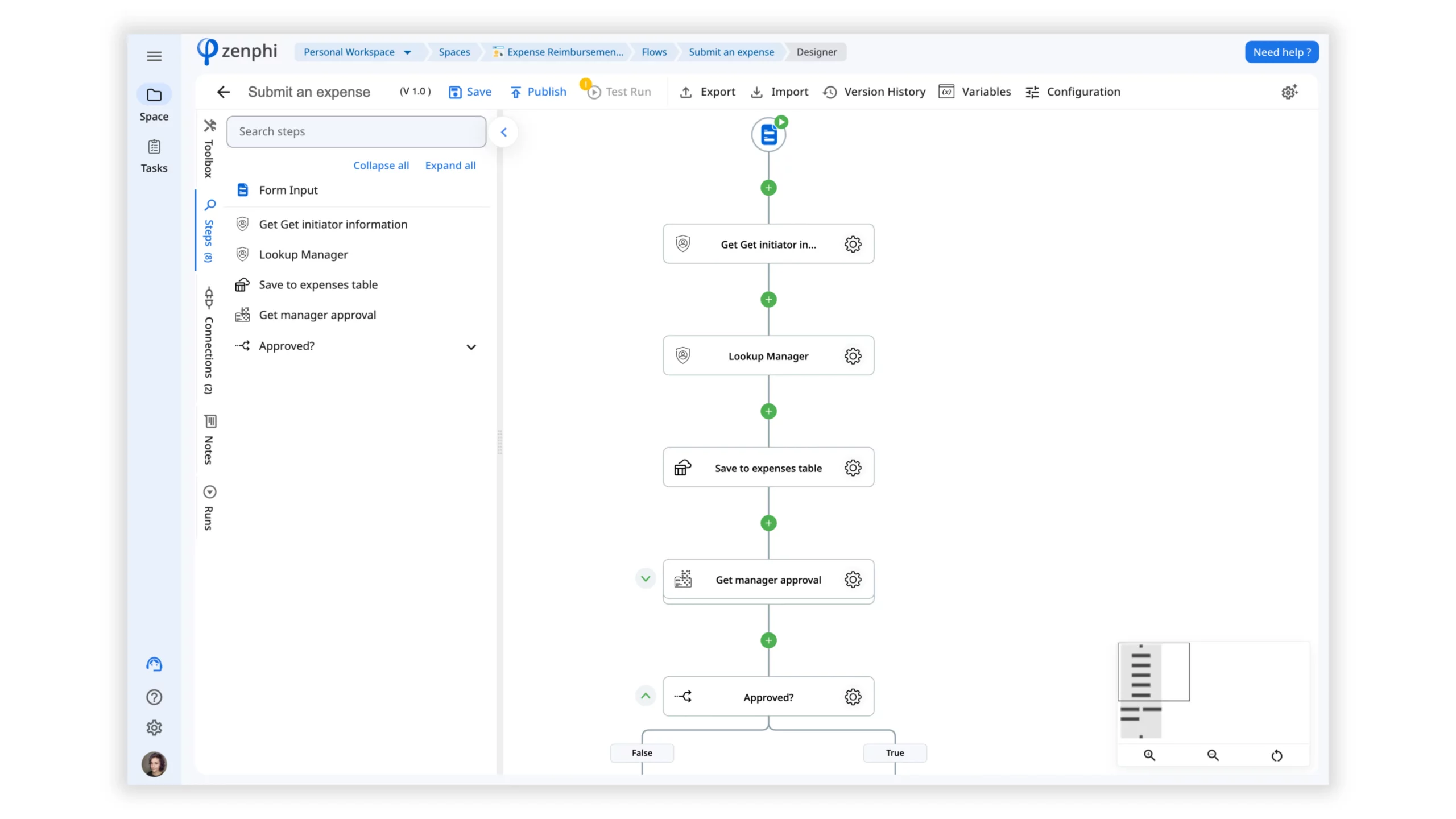
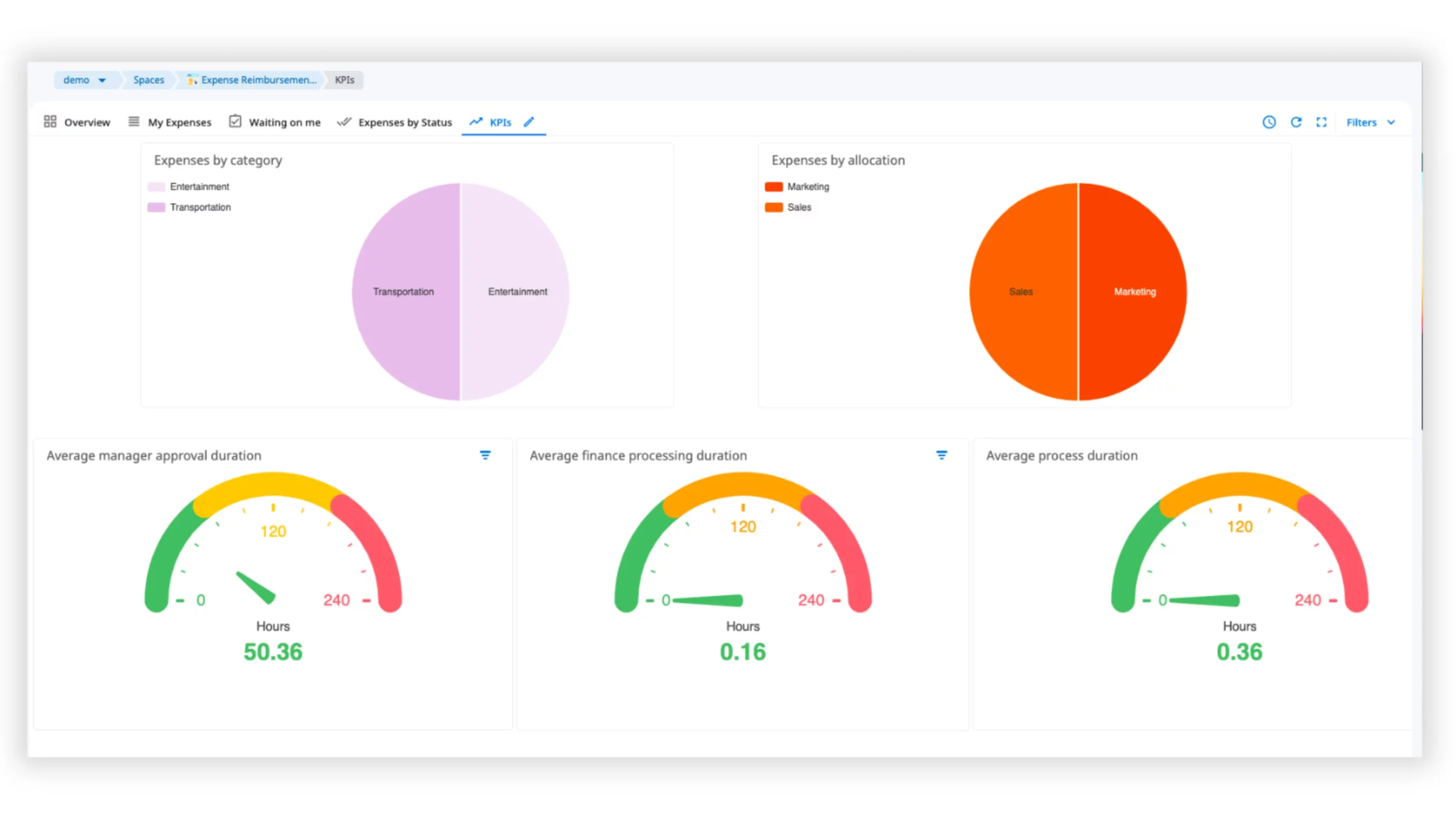
The source template includes an expense claim form, automated workflow, a table for storing process data, and dashboards for process visibility.
If the link doesn’t launch it: Zenphi Designer → new workflow → Start with a Template → search for the expense reimbursement template.
Sales quote generation and approval workflow
Google Form → Sheet tracking → approval → status update → sales notification
Quote approvals often look simple until sales volume increases. A rep submits pricing or commercial terms, the request waits for the right approver, status is tracked in a spreadsheet, and somebody has to tell the sales owner when the quote can move forward.
A Google Workspace workflow can keep Forms and Sheets as the familiar front end while automating the routing and follow-up behind them.
A Google Form captures the information required for the approval.
The quote data is added to the relevant tracking Sheet for centralized visibility.
The workflow routes the request to the appropriate person instead of relying on the sales rep to chase approval manually.
The approver reviews the request, and the workflow updates the tracked status automatically.
The relevant sales manager or owner receives the result so the customer conversation can continue.
Use the template as the starting structure, then customize the request fields, approvers, thresholds, tracking Sheet, document generation, and notification logic.
Open the Zenphi Designer → new workflow → Start with a Template → search for the sales quote approval template.
Multi-stage document approval workflow
Department review → rework loop → manager approval → final Drive file
Policies, legal documents, internal procedures, HR files, and compliance documentation often need more than one approval. They may move through different departments, return to the requester for revisions, and require a final managerial sign-off before the approved version is stored.
A multi-stage document workflow keeps the document, feedback, version changes, approvals, and final file within one controlled process.
The requester provides the document, summary, and the department or review path required.
The correct reviewer receives the current document version and can approve it or request changes.
If rejected, the requester receives the feedback, uploads a revised version, and the workflow keeps the review cycle structured.
After department approval, the workflow can identify the requester’s manager through Google Directory and route the document for final sign-off.
The final document is saved to Google Drive using the required naming convention, stakeholders are notified, and the approval history remains available.
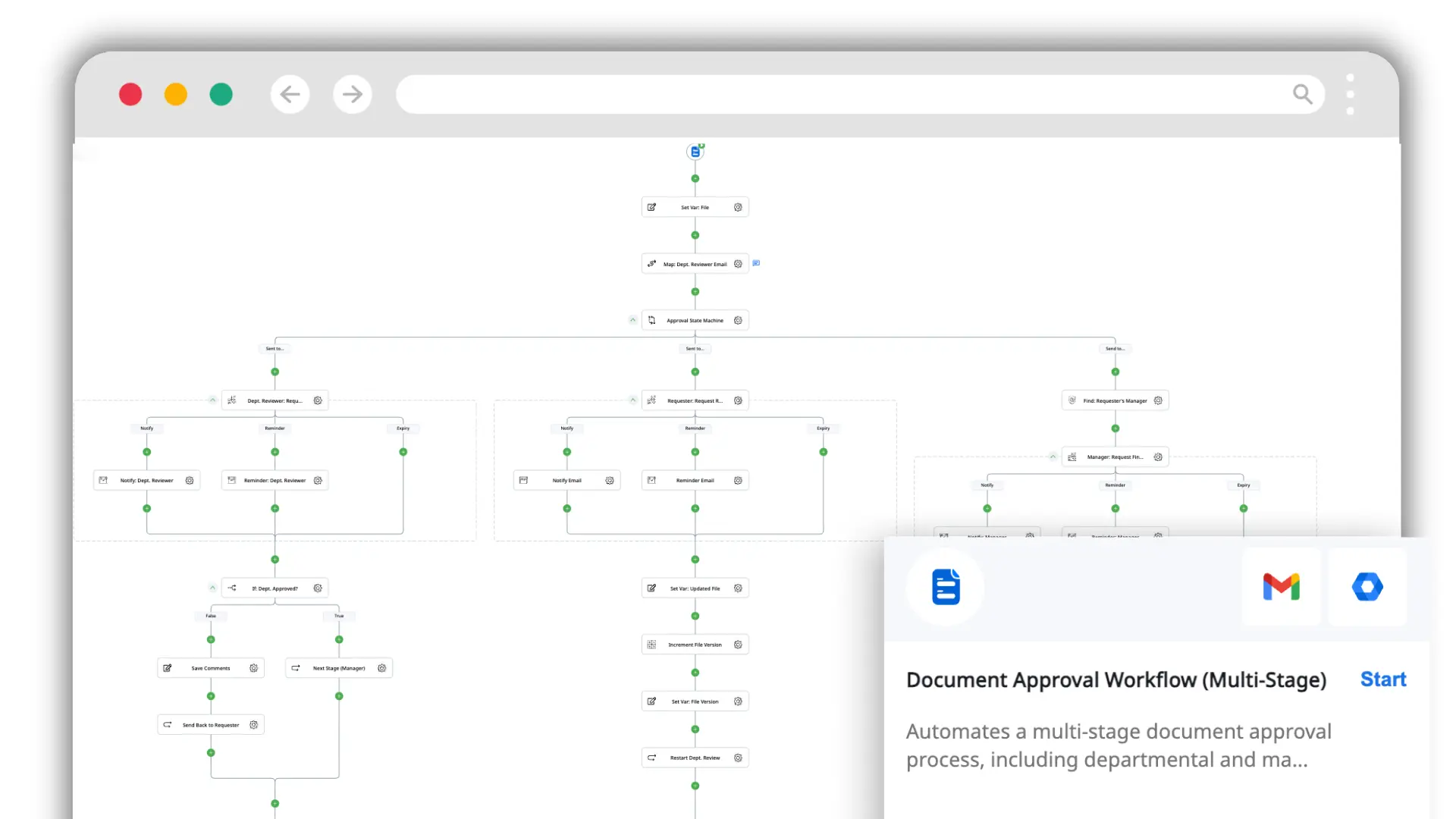
A starting point for governed document reviews with department routing, revisions, manager approval, notifications, and final Google Drive filing.
Zenphi Designer → new workflow → Start with a Template → search for the document approval template.
Leave approval with automatic Gmail out-of-office replies
Google Form → Directory lookup → manager approval → employee notification → Gmail configuration
Leave requests create small but repetitive administrative tasks for employees, managers, and HR. The approval itself is only one part of the process. Once leave is approved, the employee still needs the result, and their absence needs to be communicated correctly.
This workflow connects the approval directly to Gmail configuration so the out-of-office step is not left as a separate reminder for the employee.
The employee provides the leave type, dates, and reason through a Google Form.
The workflow uses Google Directory data to identify the employee and the correct manager.
The manager receives a structured leave request and records the decision.
The requester receives the result automatically instead of waiting for a separate HR follow-up.
For approved leave, the workflow can set the appropriate Gmail vacation response for the absence period.
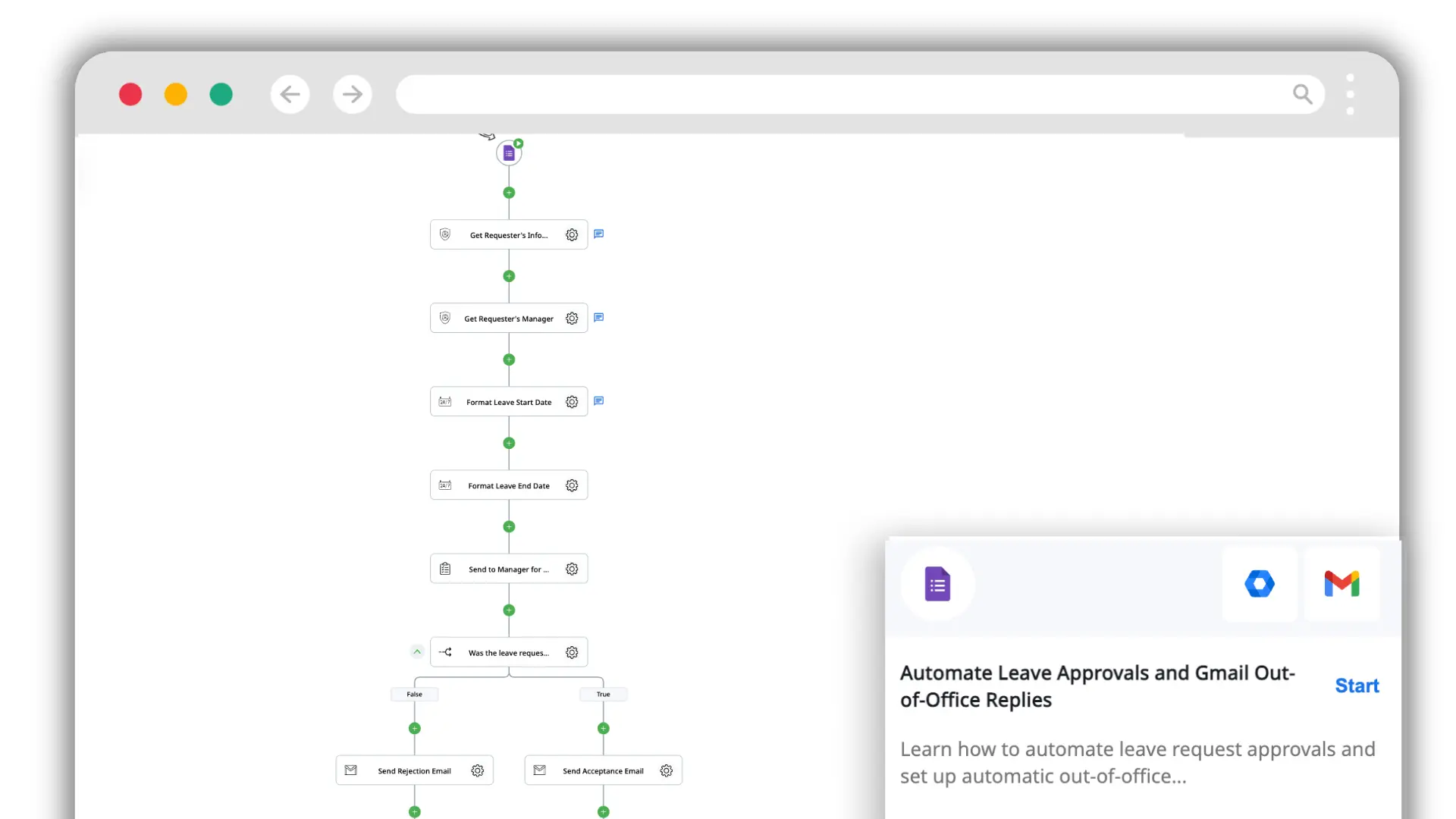
Designed for HR teams that want manager accountability, fewer manual follow-ups, and automatic Gmail configuration after an approved absence.
Zenphi Designer → new workflow → Start with a Template → search for the leave approval template.
Apps Script or a no-code workflow platform?
You can connect Google Forms, Sheets, Gmail, Drive, and other Workspace services with Apps Script. For a small, stable workflow, that may be enough. The trade-off appears when the process grows: several approval stages, dynamic manager lookup, reminders, rework loops, document generation, integrations, exception handling, and ownership by people who do not maintain code.
Zenphi is a no-code alternative to Apps Script for these process-heavy use cases. The workflow remains visible in a designer, while Google Workspace actions, business rules, approvals, data, and integrations can be changed as the process evolves.
For Google Workspace teams, the practical question is therefore not whether an approval can be automated. It is how much of the surrounding process you want to automate — and who needs to be able to maintain it six months from now.
Have an approval process that still runs through email and Sheets?
Bring the real process: who submits the request, who approves it, which Google Workspace apps are involved, and what should happen after the decision. Zenphi can turn that sequence into a governed workflow without replacing the tools your team already uses.