
The most useful document workflow templates fall into five groups: AI classification and validation, document generation, document approvals, Gmail attachment processing, and end-to-end document processes such as quote generation and NDA management. Zenphi lets Google Workspace teams start from these templates and then change the trigger, logic, AI model, approvals, integrations, document templates, storage locations, and exception handling to fit the real process.
What’s in this guide
- Five types of document workflow automation
- 1. AI document classification and auto-filing
- 2. AI document validation
- 3–4. Generate documents and certificates
- 5–7. Document approval workflows
- 8–10. Process documents arriving through Gmail
- 11–12. Quote and NDA process templates
- How to launch and customize a template
Document automation is more than generating PDFs
Organizations handle invoices, quotes, certificates, contracts, forms, reports, applications, and agreements every day. Manual document work usually spreads across Gmail, Drive folders, Google Docs, Sheets, Forms, approvals, e-signature tools, and external business systems. The result is repetitive copying, inconsistent filing, slow approvals, and poor visibility into where a document is in the process.
Document workflow automation connects those steps into one process. In 2026, that increasingly includes AI: the workflow can understand an incoming document before deciding how to name it, where to route it, what data to validate, or which human should review an exception.
Open the Zenphi Designer, start a new workflow, choose Start with a Template, and search for the relevant template. You can then connect your own Google Workspace environment and customize the workflow before publishing it.
Use AI where the document itself needs to be understood
The first two templates are different from traditional file automation because the workflow does not rely only on filenames, folders, or fixed fields. AI interprets the document content first, while Zenphi controls the operational steps that follow.
Organize Google Drive with AI-powered document classification and auto-filing
Classify, rename, route, and file documents automatically as they arrive in Drive.
This template watches Google Drive for new files — including PDFs, images, and scanned documents — and uses AI to determine what each document is. The classification result becomes input for the rest of the workflow instead of requiring a person to inspect every file first.
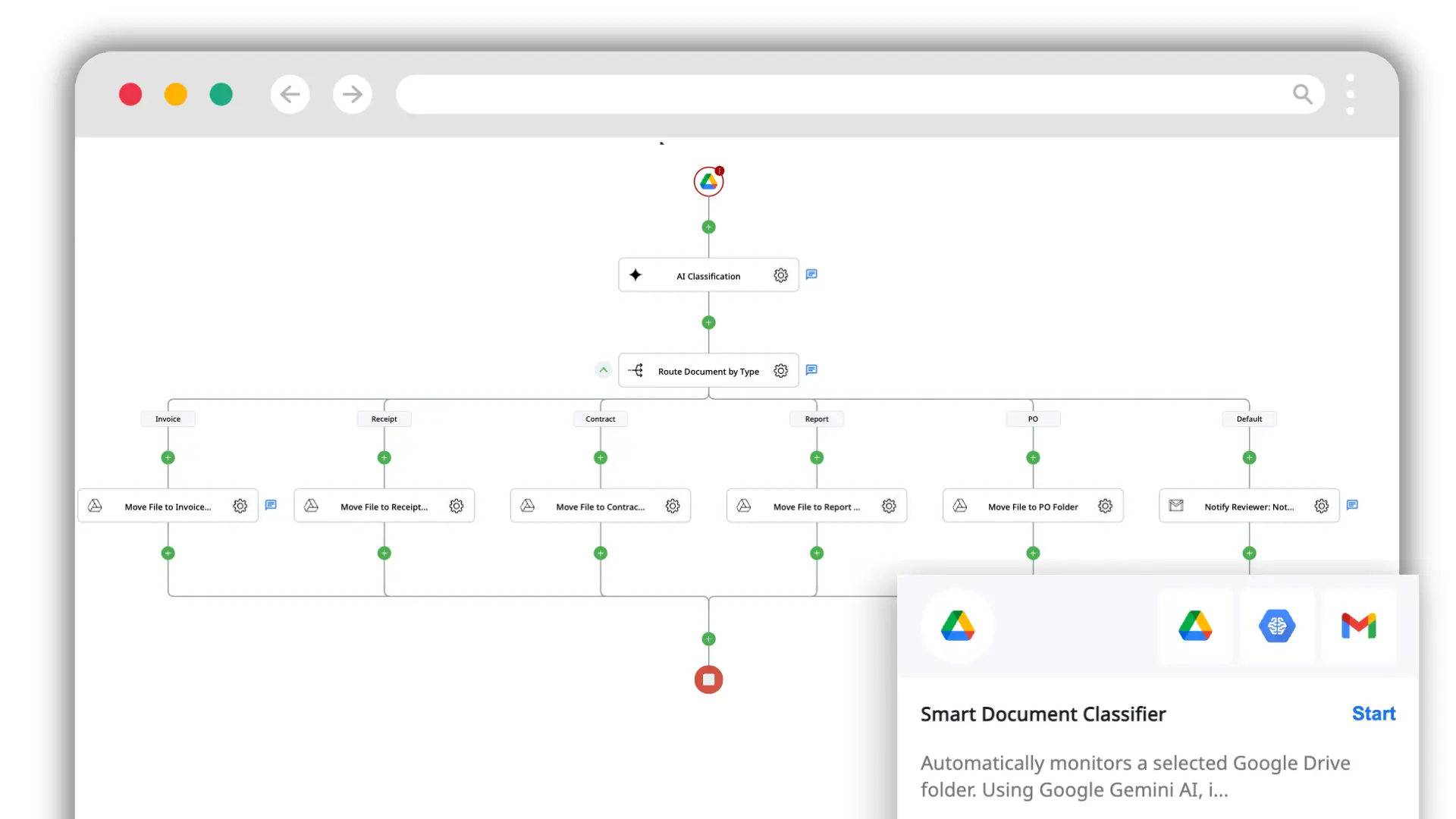
Invoice and receipt filing, contract repositories, Shared Drive organization by department or document type, standardized file naming, and audit-ready document libraries.
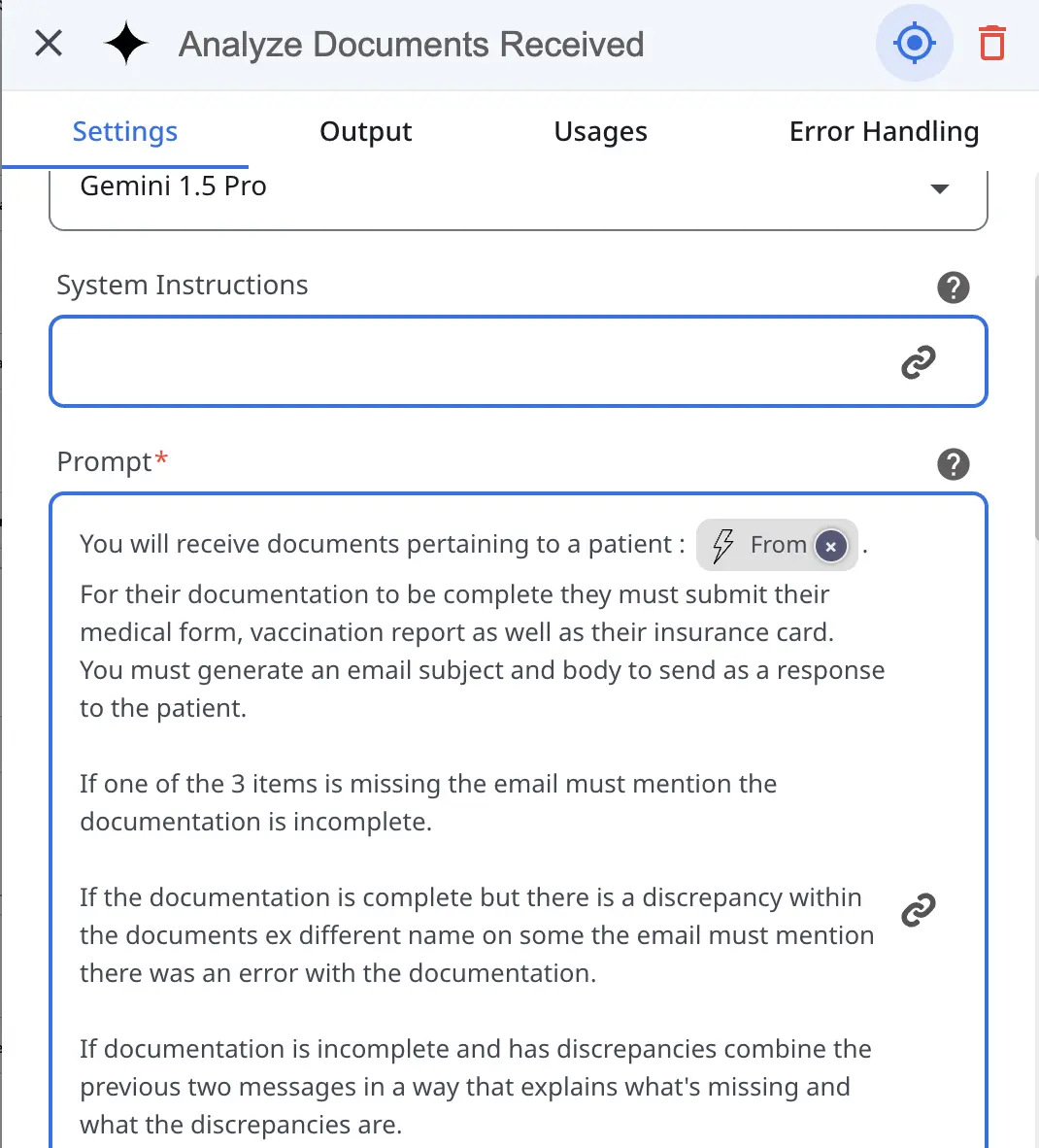
The AI step is configurable. You can adjust the prompt and model instructions and use supported models such as Gemini or OpenAI models, or connect another model through an API-based integration. The workflow around the AI step — approvals, file merging, routing, notifications, and exceptions — remains editable.
Validate incoming documents and detect missing attachments
Check completeness and consistency before the request reaches a human reviewer.
Incomplete submissions create avoidable back-and-forth in finance, procurement, compliance, and intake workflows. This template starts when an email and its attachments arrive, uses AI to inspect the documents, and then determines whether the submission can move forward.
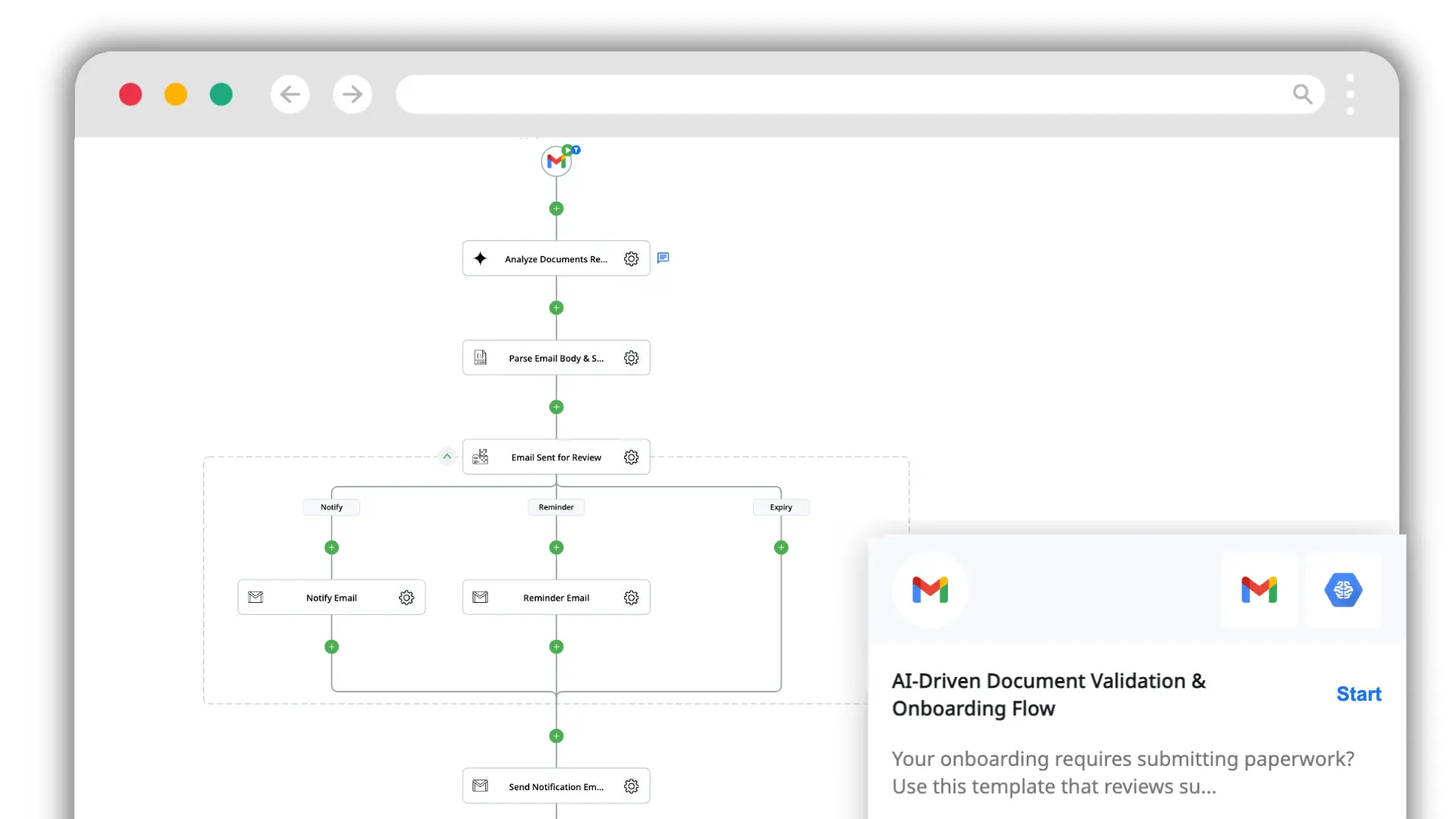
If the documents pass validation, the workflow can notify the reviewer and continue. If something is missing or inconsistent, it can draft and send a context-aware email explaining exactly what the sender needs to provide.
Supplier invoice intake, purchase-order and invoice checks, patient intake, compliance-document verification, and vendor onboarding.
Templates 3–4: turn structured data into Docs, PDFs, and Slides
Document generation is useful whenever employees repeatedly create the same type of document with different names, dates, values, clauses, or other data. Instead of copying an old file, the workflow uses a template and structured inputs to generate the correct version automatically.
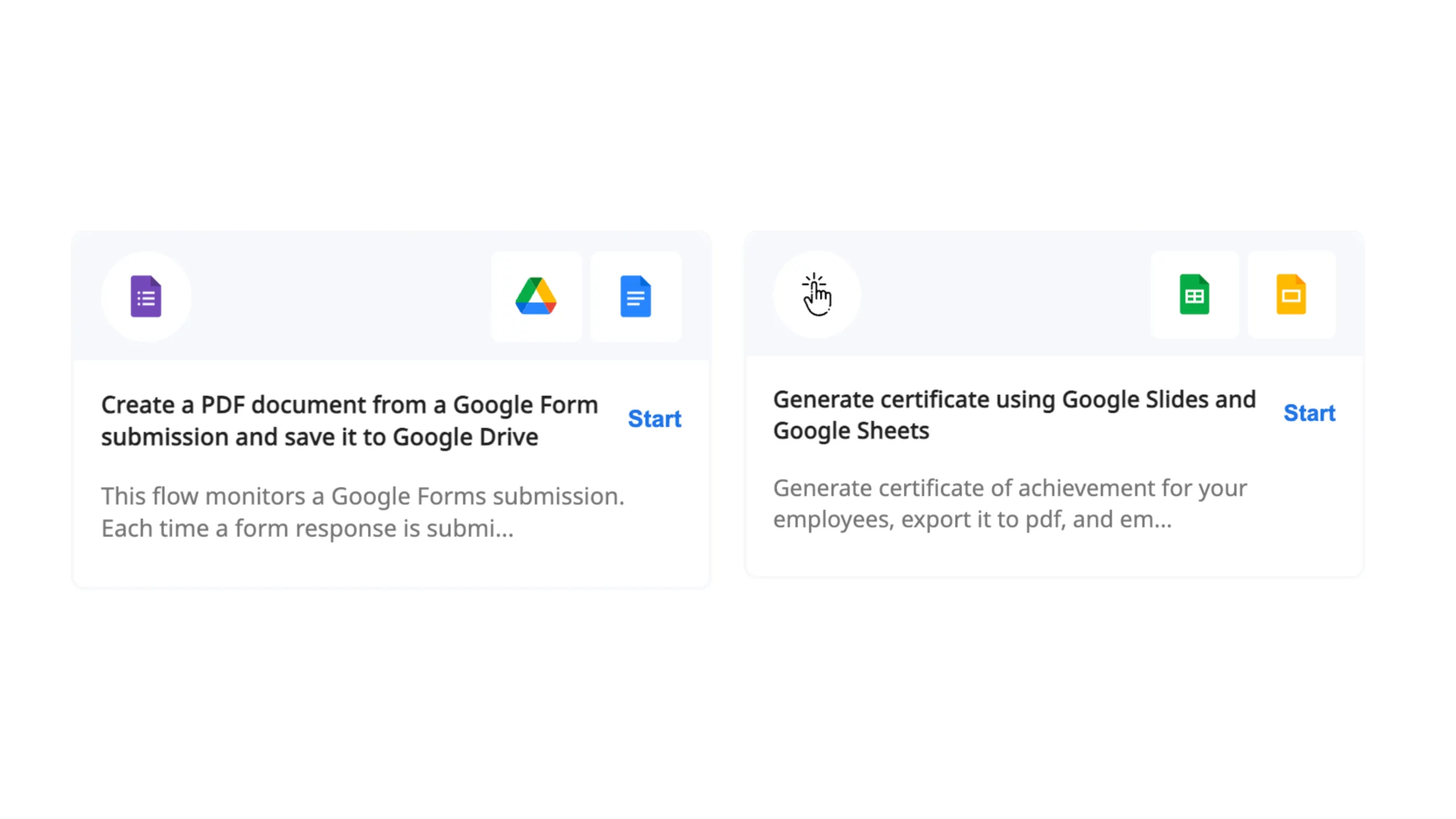
Create a PDF from a Google Form submission and save it to Google Drive
Use a Google Form to collect the variable data and a Google Docs file as the master template. When the form is submitted, the workflow inserts the submitted values into the correct placeholders, generates the document, converts it to PDF if required, and files it in Drive.
Typical examples include admission letters, invoices generated from structured data, employee offer letters, sales quotes, and proposals. The workflow can also create or select Drive folders dynamically based on employee, customer, department, or other document data.
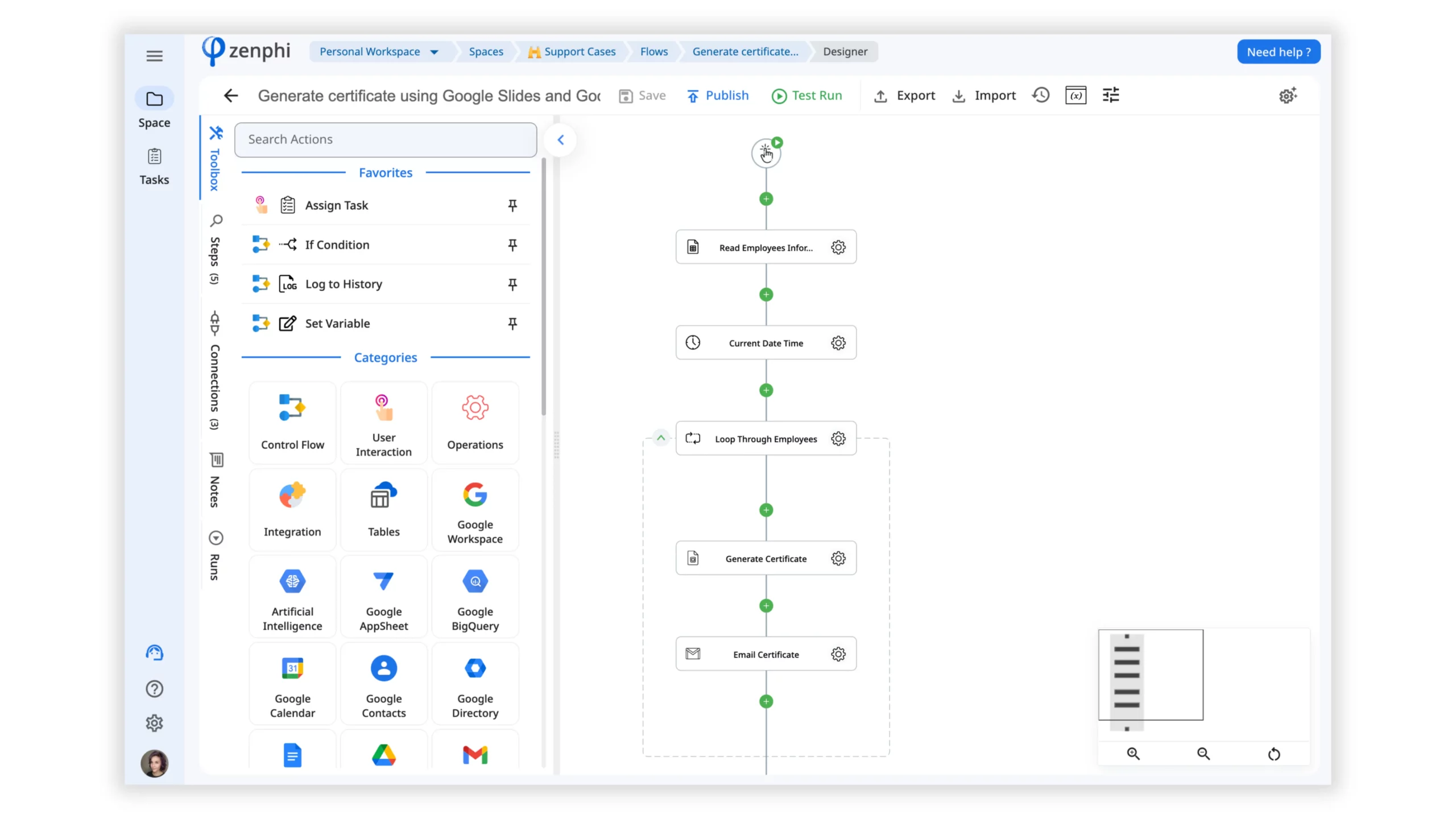
Generate certificates with Google Slides and Google Sheets
This pattern uses structured data to create personalized Google Slides output. Training and education teams can generate certificates automatically, while other teams can adapt the same workflow to populate presentations with live data from Google Sheets.
The important workflow pattern is reusable: take structured data, insert it into a Slides template, generate the personalized asset, then store or distribute it automatically.
Templates 5–7: move documents through the right approval path
Approvals are often where document workflows slow down. The document may already exist, but nobody knows who should review it, whether another team needs to see it first, or what happens when an approver does not respond. These three templates show progressively more complex approval patterns.
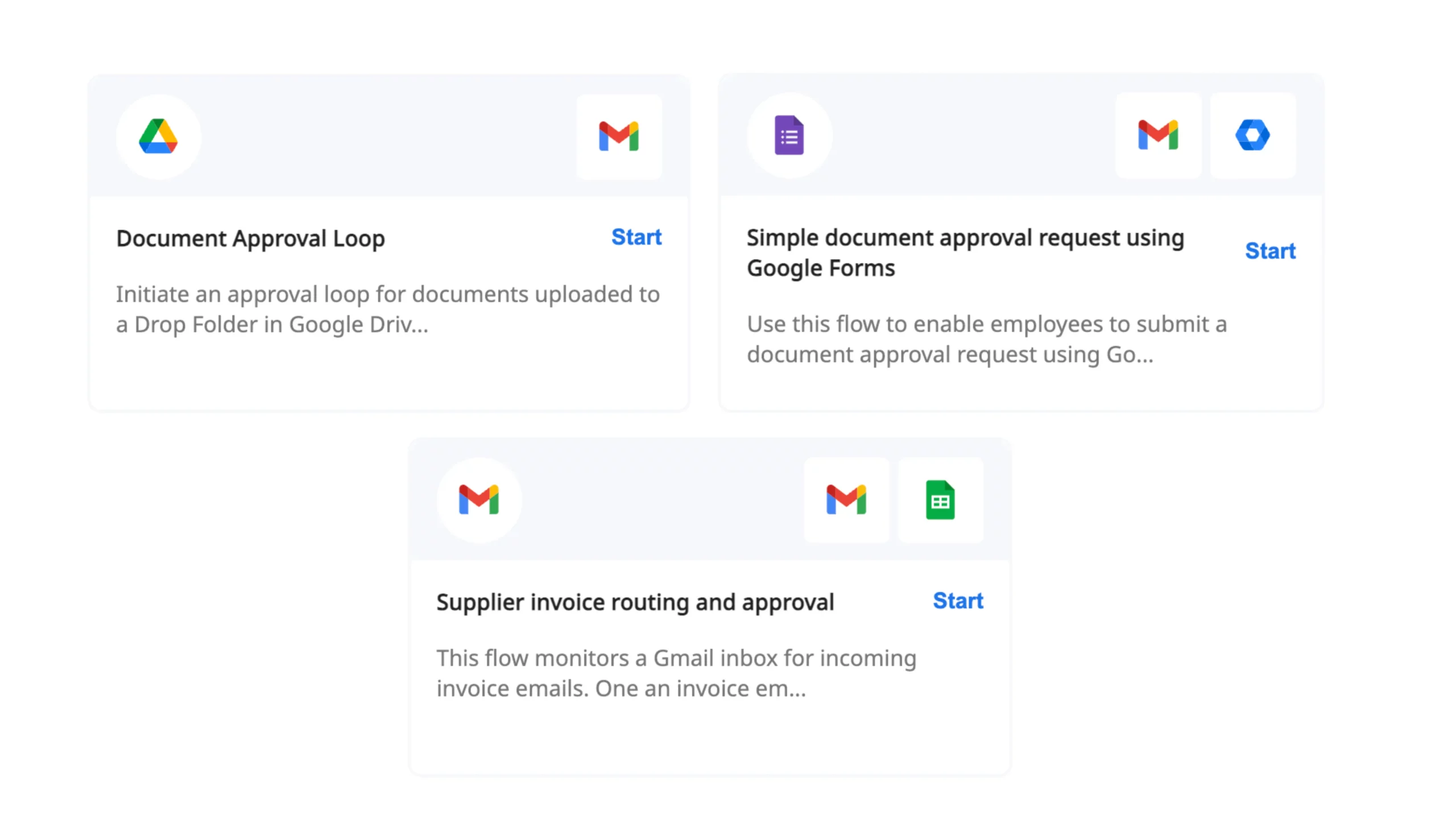
Simple document approval request using Google Forms
An employee submits a document-approval request through Google Forms. The workflow looks up the employee’s manager in Google Directory, sends the document for review, and, once approved, can export it to PDF and return the final document to the requester.
The task step can also be replaced or supplemented with external work-management tools if your organization handles approvals in another system.
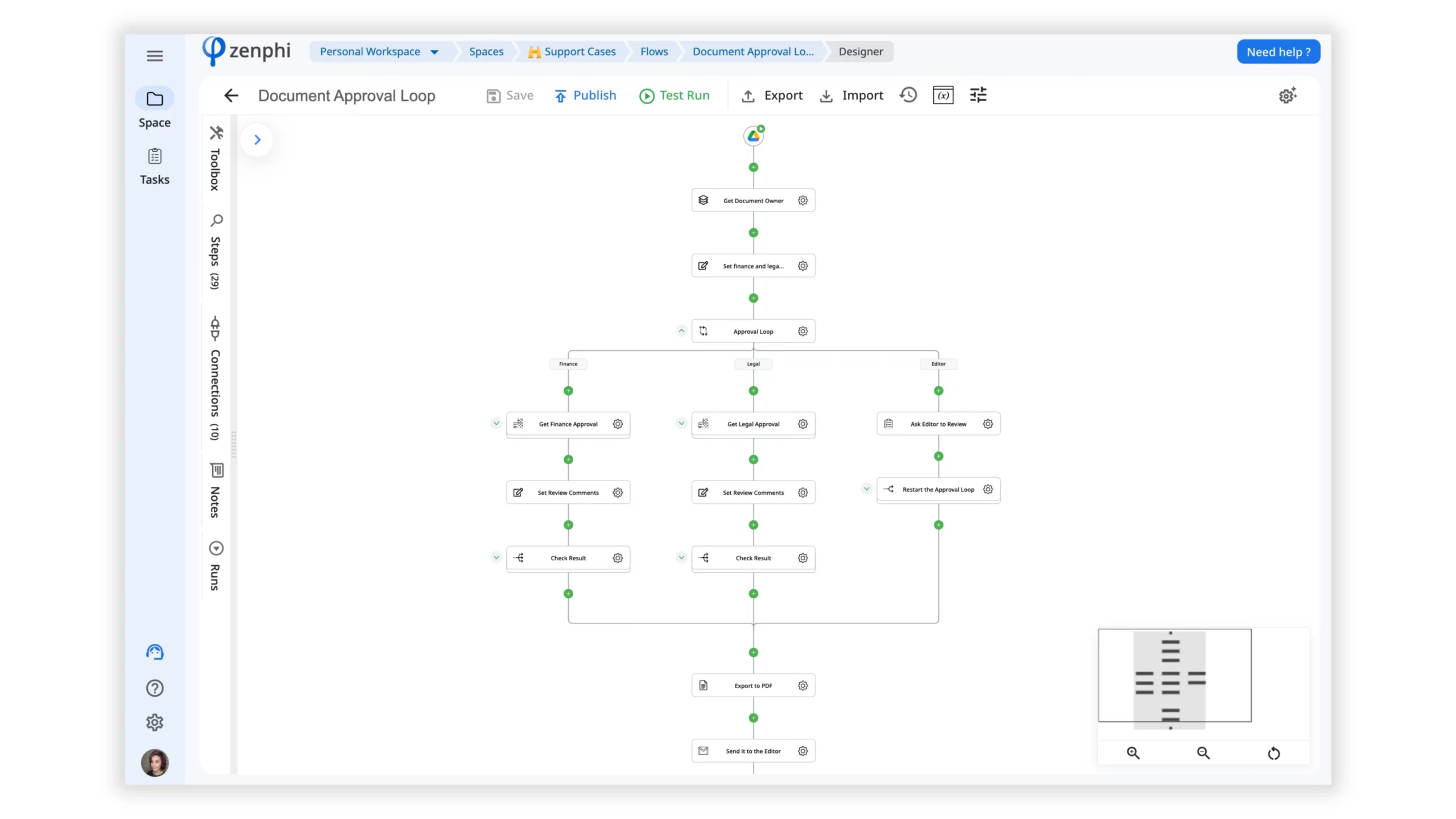
Document Approval Loop
This template is for documents that move repeatedly between several stakeholders before they are final. A document added to a designated Google Drive folder can enter an approval loop involving teams such as Finance, Legal, and the original editor, with the workflow controlling each return and resubmission.
Once the document receives final approval, the workflow can convert it to PDF and send the approved version back to the requester.
Supplier invoice routing and approval
Monitor a Gmail inbox for supplier invoices, identify the correct reviewer using structured routing data such as a Google Sheets table, and send the invoice into the appropriate approval path before Finance continues processing it.
This pattern can be expanded with AI document extraction, PO matching, approval thresholds, reminders, escalation, and exception handling.
Templates 8–10: automate documents that arrive through email
For many teams, Gmail is effectively the intake system for business documents. These templates turn the email, body content, attachments, and sender information into structured files and folders instead of relying on employees to download and reorganize everything manually.
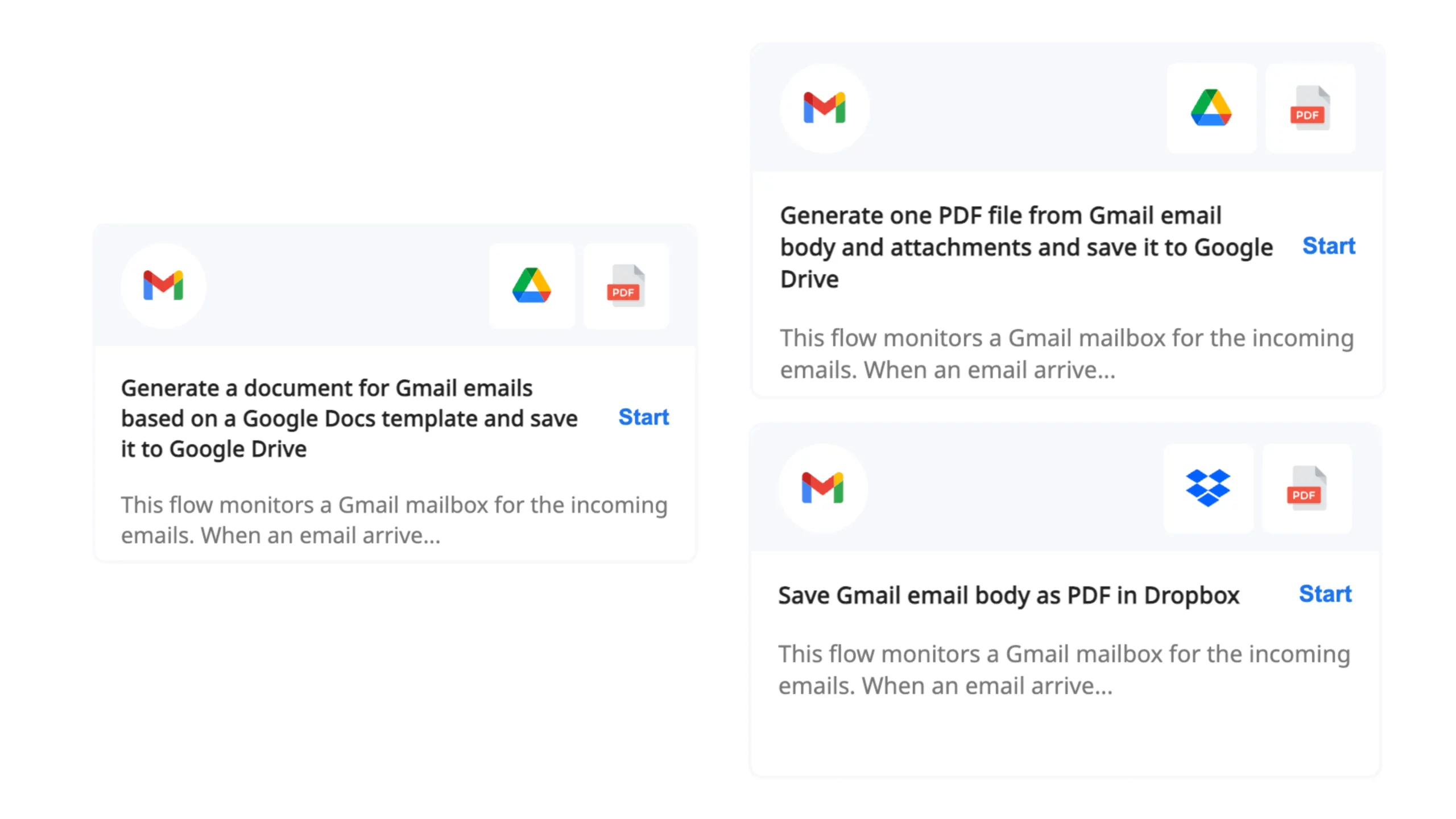
Generate a document from a Gmail email and save it to Google Drive
When an email arrives, the workflow creates a Drive folder for the sender, saves the attachments, turns the email content into a document using a Google Docs template, and stores the resulting files together.
This is useful for support requests, customer submissions, applications, and other processes where each incoming email should become a structured case or document record.
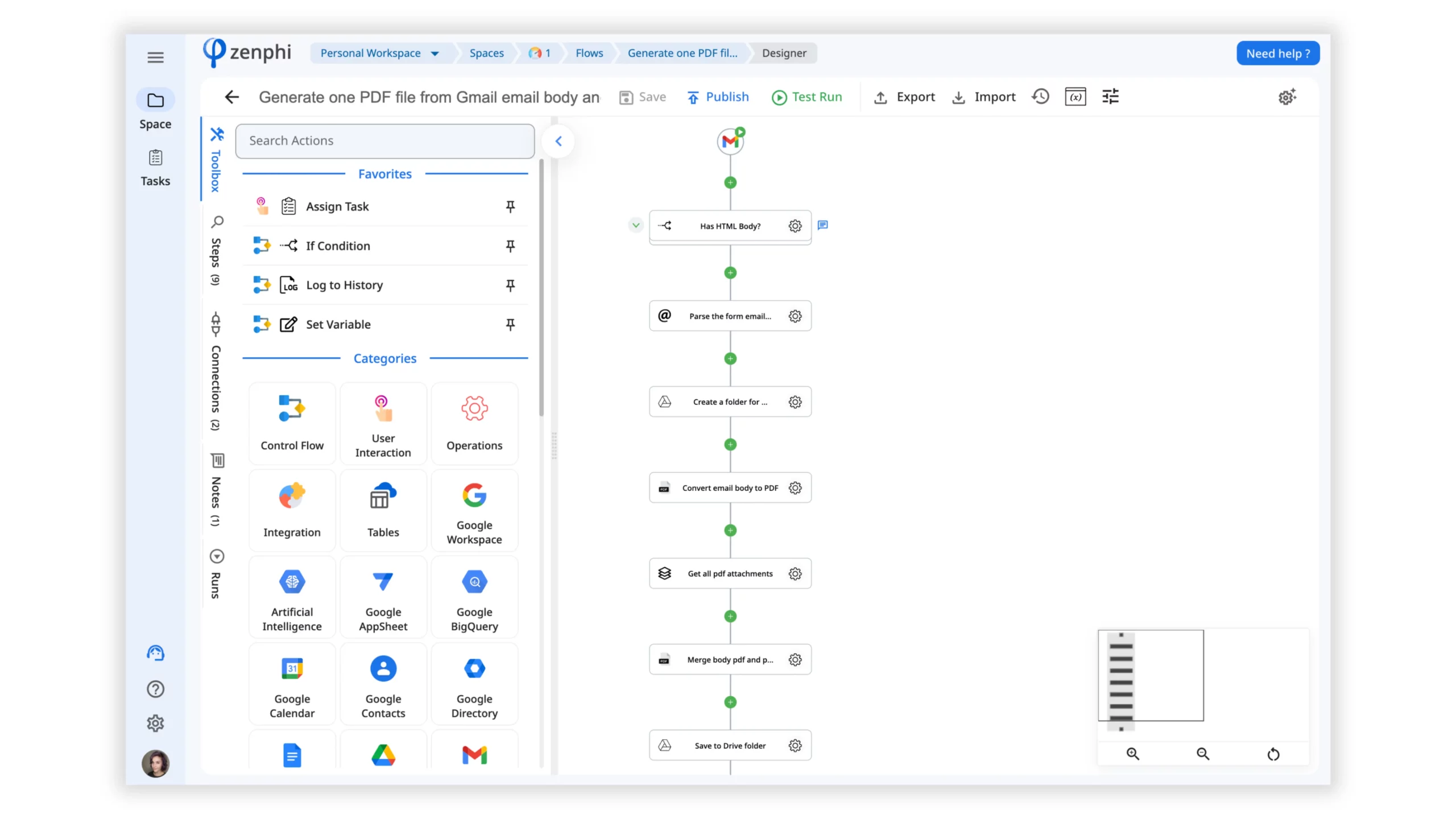
Merge the Gmail email body and attachments into one PDF
For invoice or document-heavy inboxes, the workflow can convert the email body to PDF, merge it with the PDF attachments, create or select the correct Drive folder, and save one consolidated document.
This keeps the message context and attached documents together instead of forcing employees to search across email and Drive later.
Save Gmail email content as PDF in Dropbox
This variation sends the processed document outside Google Drive. For example, an HR team receiving candidate emails can create a dedicated Dropbox folder for each applicant and save the email content and relevant information as a PDF in that location.
The same pattern demonstrates how Zenphi can keep Gmail as the intake point while using another document repository as the destination.
Templates 11–12: automate the process around the document
Some document workflows need more than a single Flow. Zenphi Space templates can package workflows together with Tables for process data and Dashboards for visibility. The source article uses quote generation and NDA management as two examples.
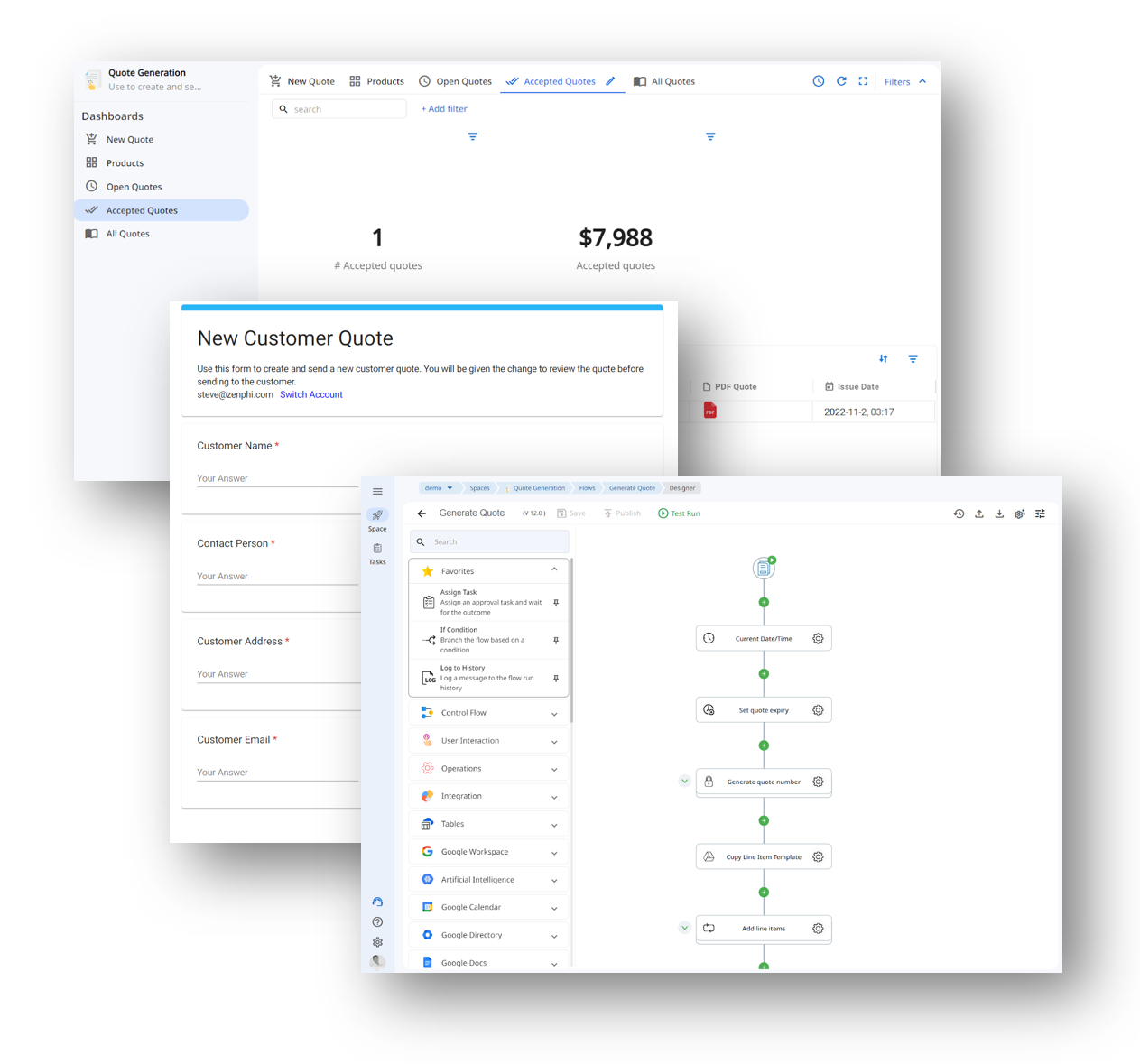
11. Quote Generation Template
A quote request starts through a Zenphi form. The workflow generates a Google Docs quote from a template, routes it for review, converts the approved version to PDF, and sends it to the customer.
Generate, review, approve, convert, and send the quote.
Store quote and product information and track open, accepted, and other quote statuses.
12. NDA Template
Generate an NDA from a Google Docs template, send it for electronic signature, save the signed document in the appropriate Google Drive folder, and notify the requester. The process can include an additional Legal approval before the NDA goes to the third party.
Automate document generation, review, signature routing, filing, and notifications.
Track process data, KPIs, and document status through structured views such as Kanban.
How to launch and customize a document workflow template
Templates are starting points. Before publishing one, connect it to your environment and change the assumptions that do not match your process.
Sign in and choose the Space where the document process should live.
Create a new workflow, choose Start with a Template, and search for the relevant template by name or use case.
Set up the Google Workspace and external connections required by the workflow, such as Gmail, Drive, Sheets, e-signature, Dropbox, or another application.
Edit triggers, actions, prompts, conditions, approvers, templates, folder rules, notifications, and exception paths to match the real process.
Test successful runs as well as missing attachments, rejected approvals, unexpected document types, unavailable data, and other exceptions.
Publish once the workflow is validated, then use execution history, Tables, and Dashboards where appropriate to monitor the process.
Have a document process that doesn’t fit a template exactly?
Use the template as the starting architecture. Zenphi workflows can combine Google Workspace actions, approvals, AI document processing, human review, external APIs, e-signature, storage systems, and business applications in one governed process.