
Google Workspace admins can automate much more than sending email. Gmail automation can standardize signatures, provision labels and filters, assign aliases, configure forwarding addresses, audit forwarding behavior, and connect those actions to onboarding, role changes, offboarding, Google Forms, Directory events, HR systems, and approval workflows.
What’s in this guide
The problem is not one Gmail setting. It is repeating the same configuration across hundreds of users.
Creating one label or changing one signature takes minutes. The cost appears when the same steps have to be repeated every time someone joins a department, changes roles, starts a new campaign, needs a new alias, or receives a temporary forwarding rule.
Google Workspace already gives users and administrators the underlying Gmail capabilities. For example, Gmail supports labels and filters, while administrators can manage user aliases and routing. Automation becomes valuable when those settings need to be applied consistently, repeatedly, and as part of a larger process.
Make Gmail configuration part of onboarding instead of a separate checklist for IT.
Apply the same approved signature, labels, filters, and email settings based on role or department.
Update Gmail automatically when the user’s title, team, responsibility, or employment status changes.
Zenphi currently provides more than 35 pre-built Gmail actions plus Google Admin Gmail actions for tasks such as signature updates, label provisioning, forwarding management, delegates, and related Gmail administration. That means the Gmail step can sit inside a broader Google Workspace workflow instead of operating as an isolated script.
Standardize Gmail signatures automatically
Template → Directory data → personalized signature → apply to selected users
Email signatures change more often than most IT teams would like: a rebrand, new legal text, a campaign banner, new job titles, a phone-number format change, or simply a new employee. Asking every user to update their own signature creates inconsistent results and a lot of follow-up.
A better model is to maintain one approved template, merge it with user data from Google Directory, and apply the finished signature automatically to the relevant users, departments, groups, or organizational units.
You can start from Zenphi’s Google Admin workflow template. It contains multiple workflows that you might need, and steps necessary to coordinate these templates — like, Directory lookup, personalized HTML generation, and Gmail update.
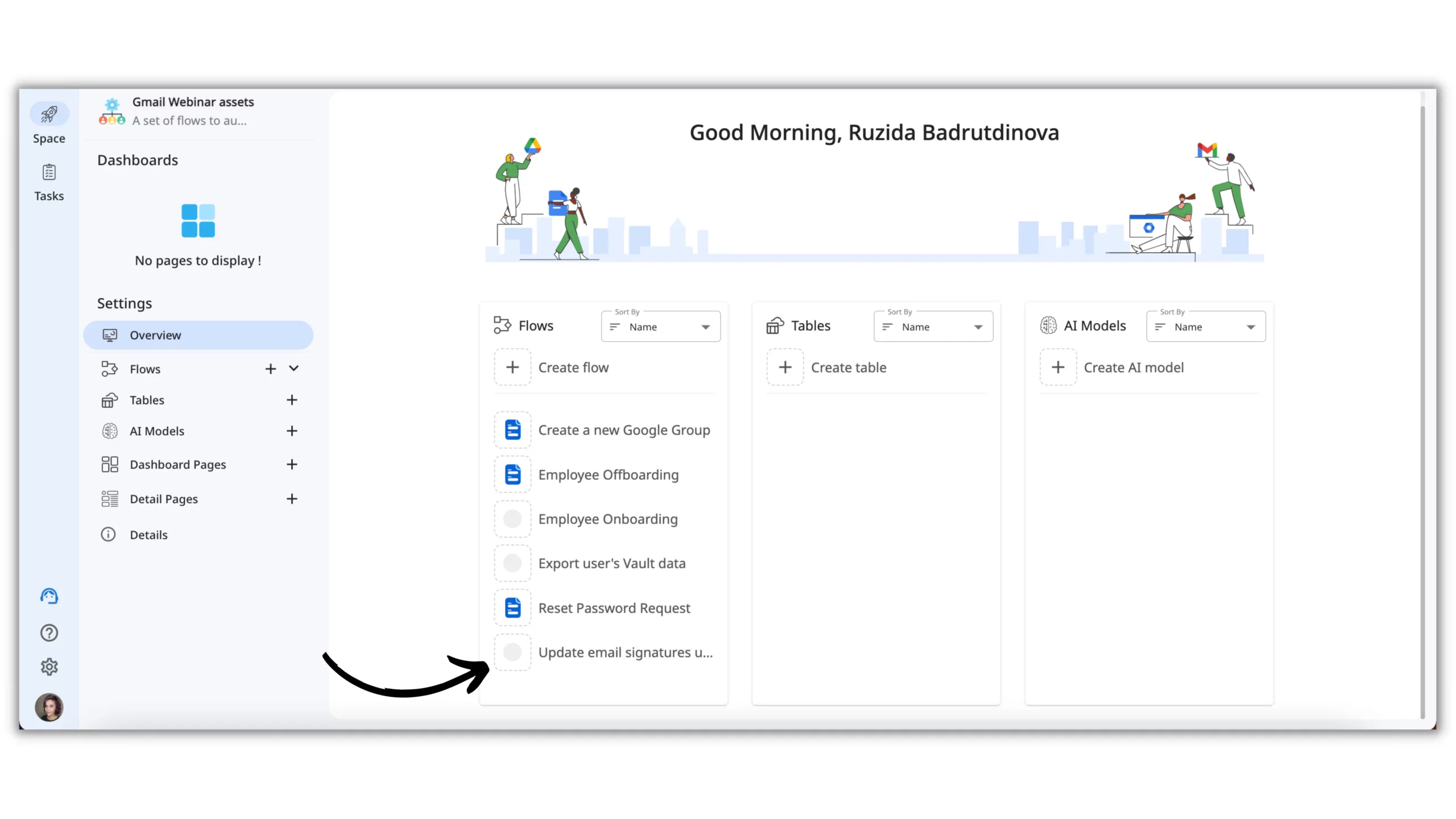
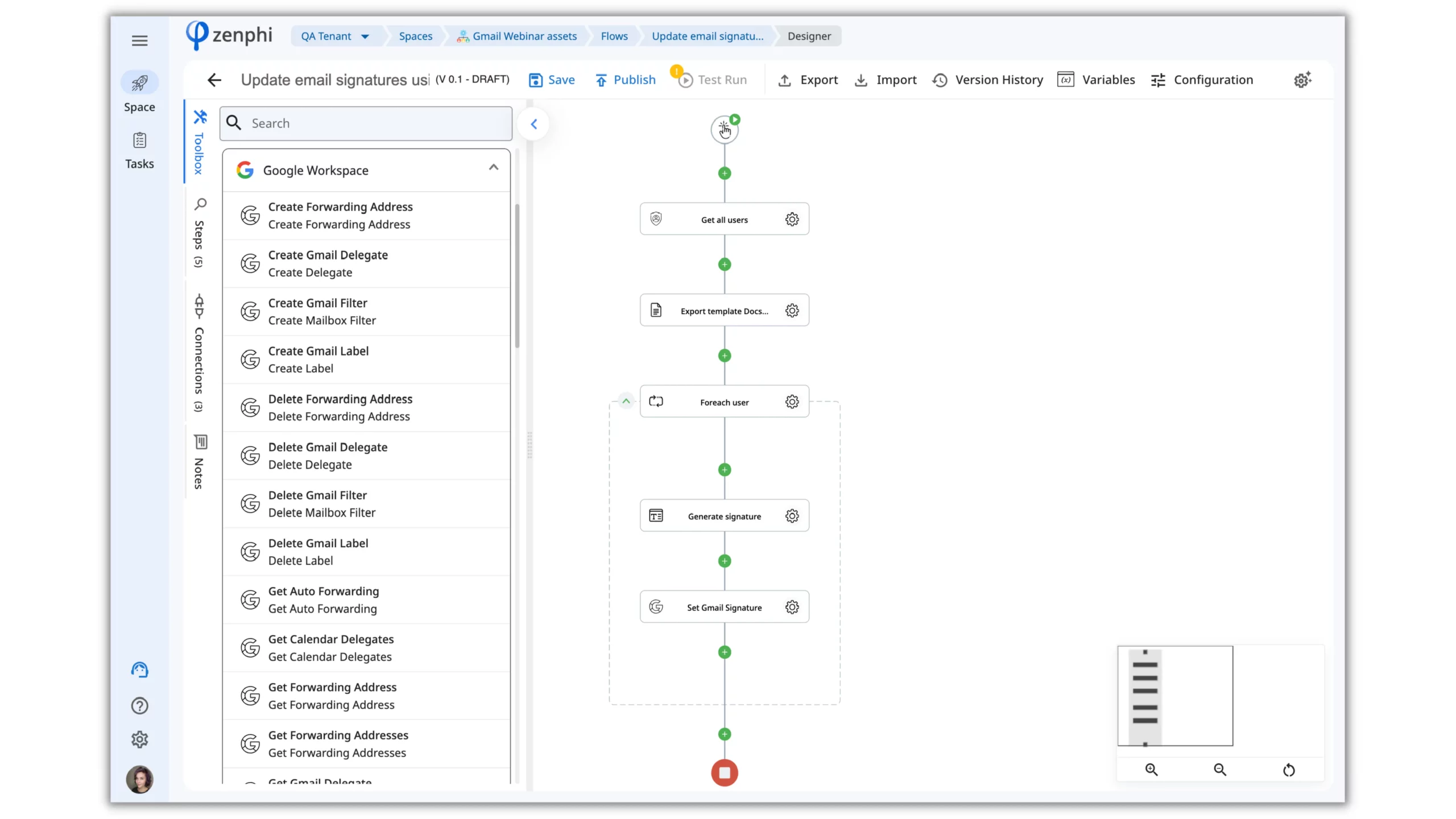
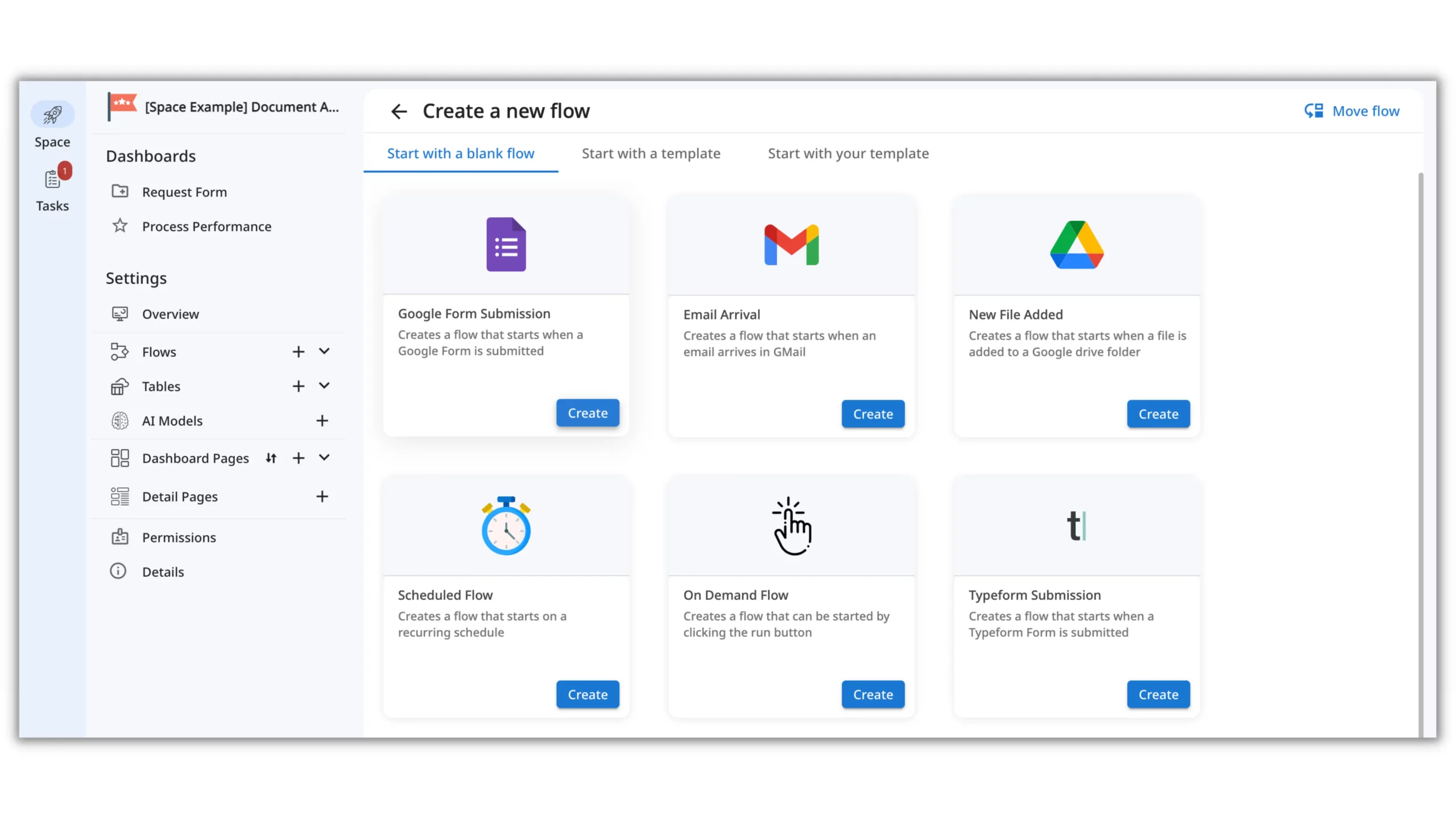
New-hire provisioning, job-title changes, rebrands, legal disclaimer updates, campaign banners, and department-specific signatures.
Provision Gmail labels for new hires and teams
Onboarding event → determine role → read label list → create labels for the user
Gmail labels are personal to the user’s mailbox, which means a consistent label structure can become surprisingly tedious to roll out manually. If a sales team, support team, or finance department expects every new employee to begin with the same label hierarchy, provisioning can be automated.
The workflow can determine which label set belongs to the new employee, read that configuration from Google Sheets or another source, and create the required labels automatically. Visibility settings can be configured as part of the same process.
For example, a Google Form submission can be the onboarding trigger, while the label list is maintained in Sheets and processed as part of the workflow.
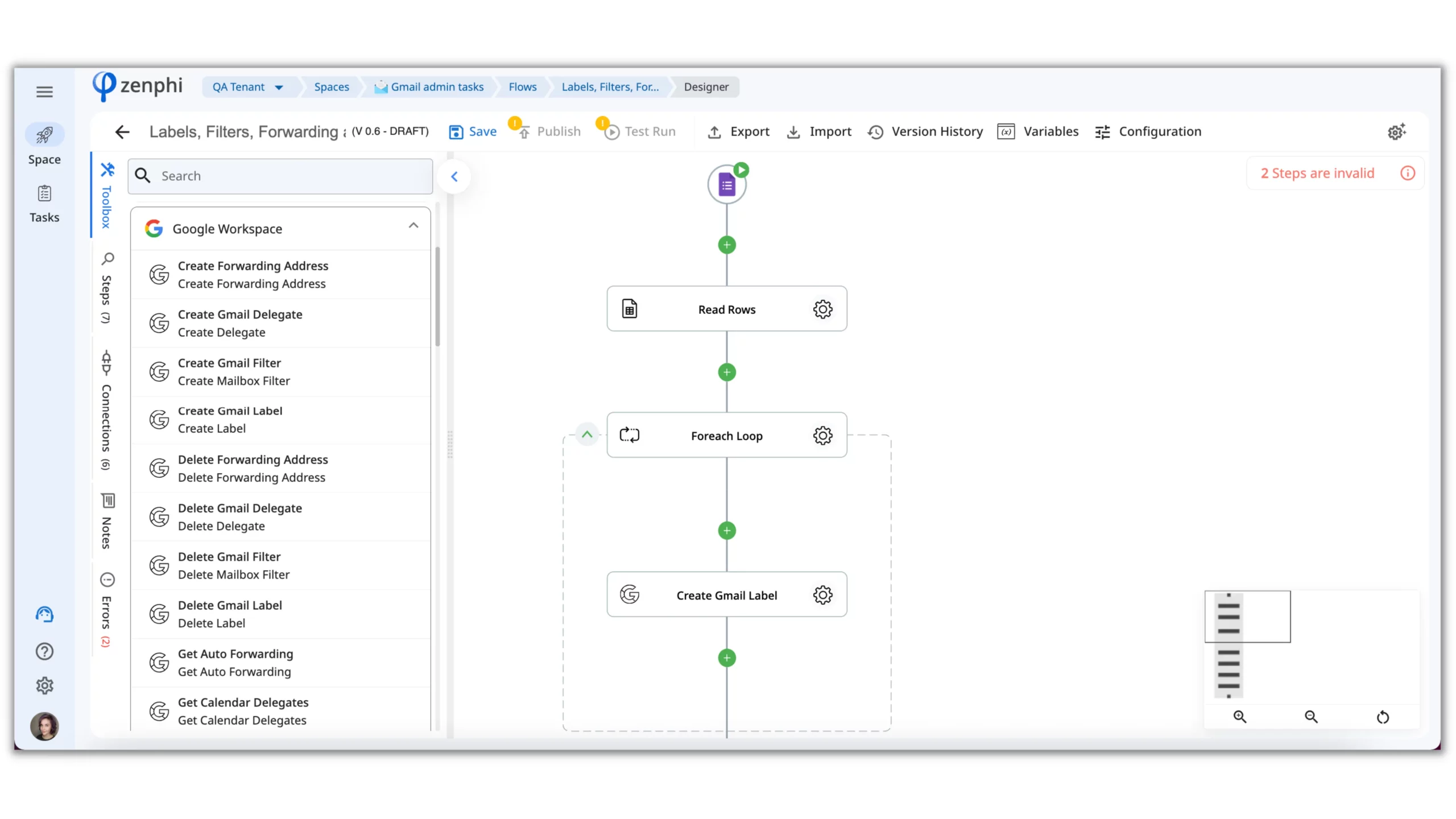
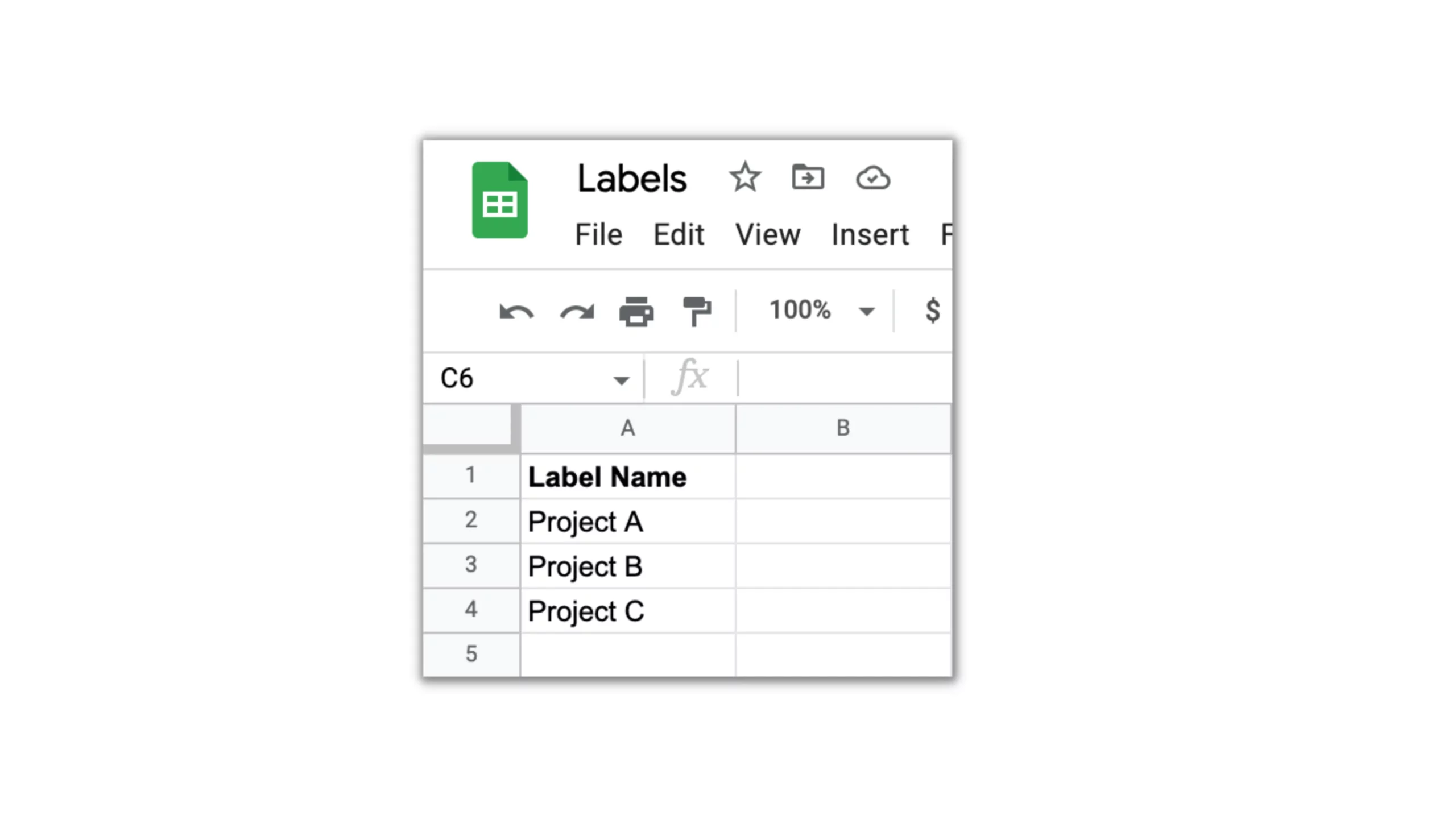
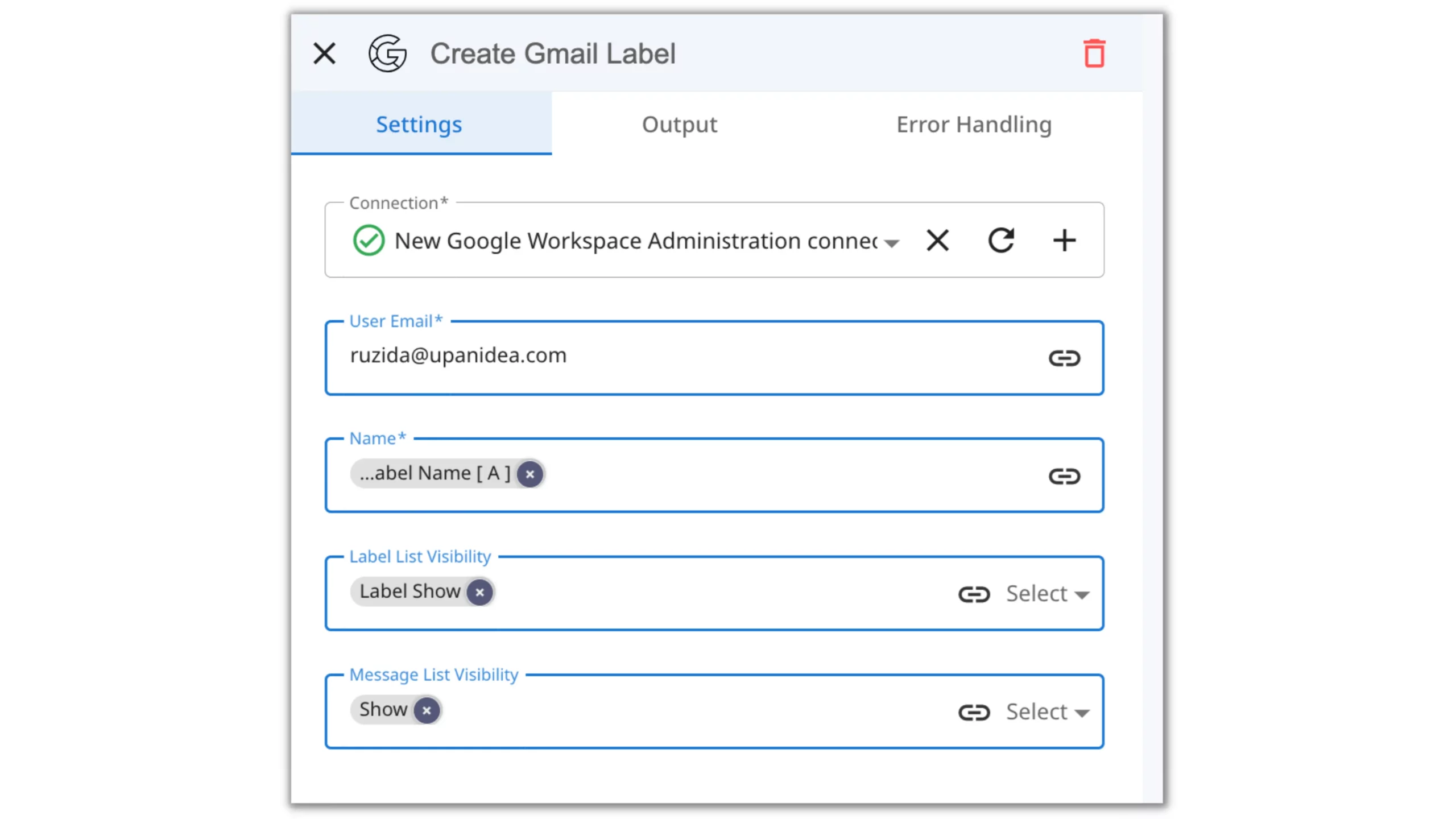
New employee onboarding, department transfers, standardized shared processes, and bulk Gmail configuration changes.
How much of your new-hire Gmail setup is still a checklist?
Bring the steps your admins repeat for every employee. The Zenphi team can map which Gmail and Google Admin actions can run automatically as part of onboarding or user lifecycle management.
Create role-based Gmail filters
User created or role changed → choose filter rules → create mailbox filters automatically
Filters are one of Gmail’s most useful productivity features because they automatically act on incoming messages based on defined criteria. They can apply or remove labels, archive messages, star them, or forward matching messages.
For administrators, the opportunity is to provision standard filters when a person’s role requires them. A support employee might need filters for escalation notices, a finance user might need invoice-related rules, and an executive assistant might need filters tied to a specific mailbox workflow.
Zenphi’s Create Gmail Filter step can be included in onboarding or another user-management workflow.
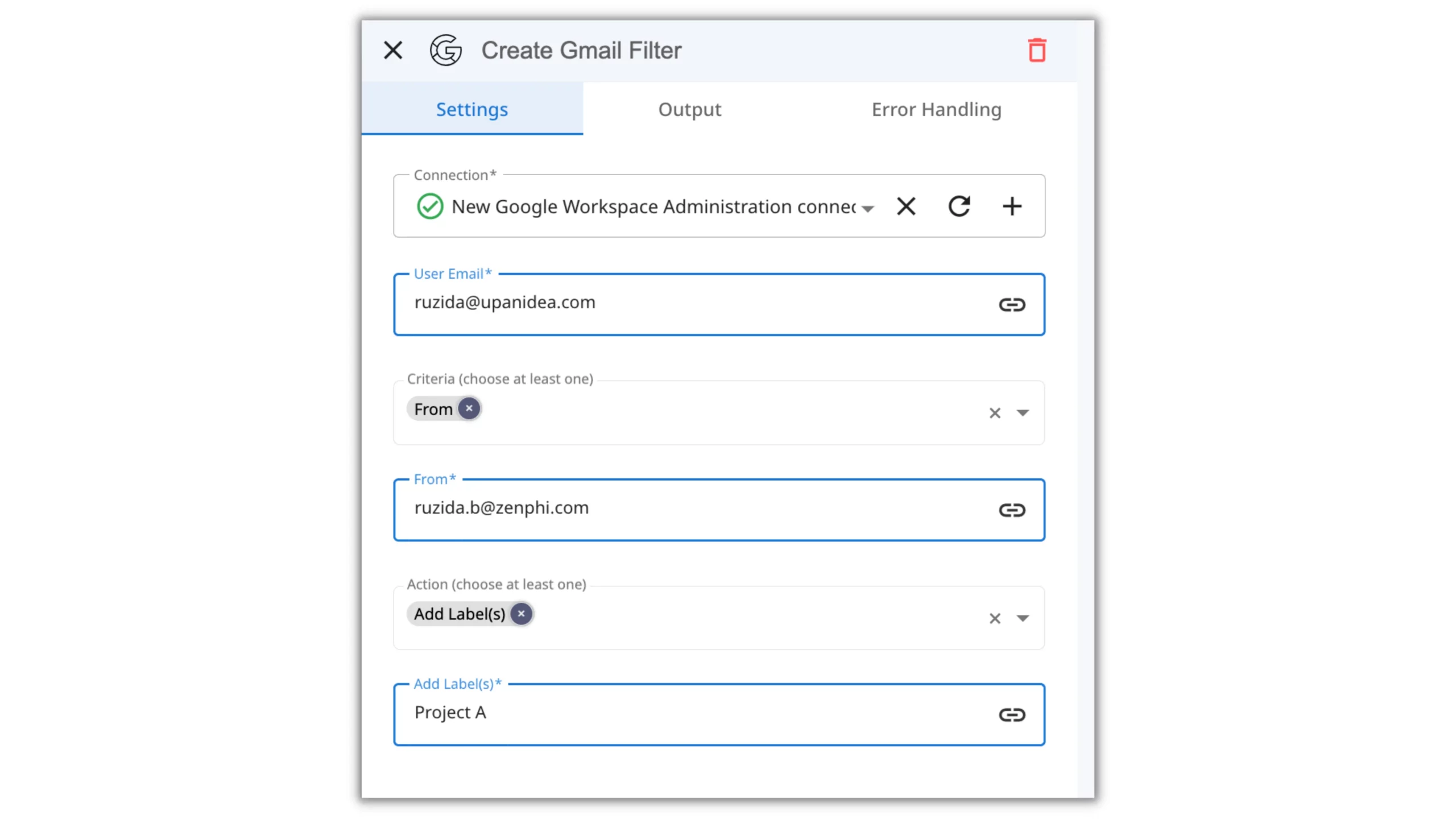
Role-based inbox setup, standard handling of alerts and notifications, project-specific mail organization, and consistent mailbox configuration across a team.
Assign email aliases as part of provisioning
Role or request approved → identify the user → create the required alternate address
An email alias is an alternate address that routes messages to a user’s primary Google Workspace mailbox. Aliases are useful when one person needs role-based addresses such as sales@, billing@, or another branded address without creating a separate mailbox for each one.
Google Workspace admins can add alternate email addresses manually. Automation becomes useful when the alias should be assigned according to a repeatable rule — for example, when someone joins a team, takes ownership of a function, or has a request approved.
Zenphi’s Add Alias action can be inserted at the relevant point of the workflow.
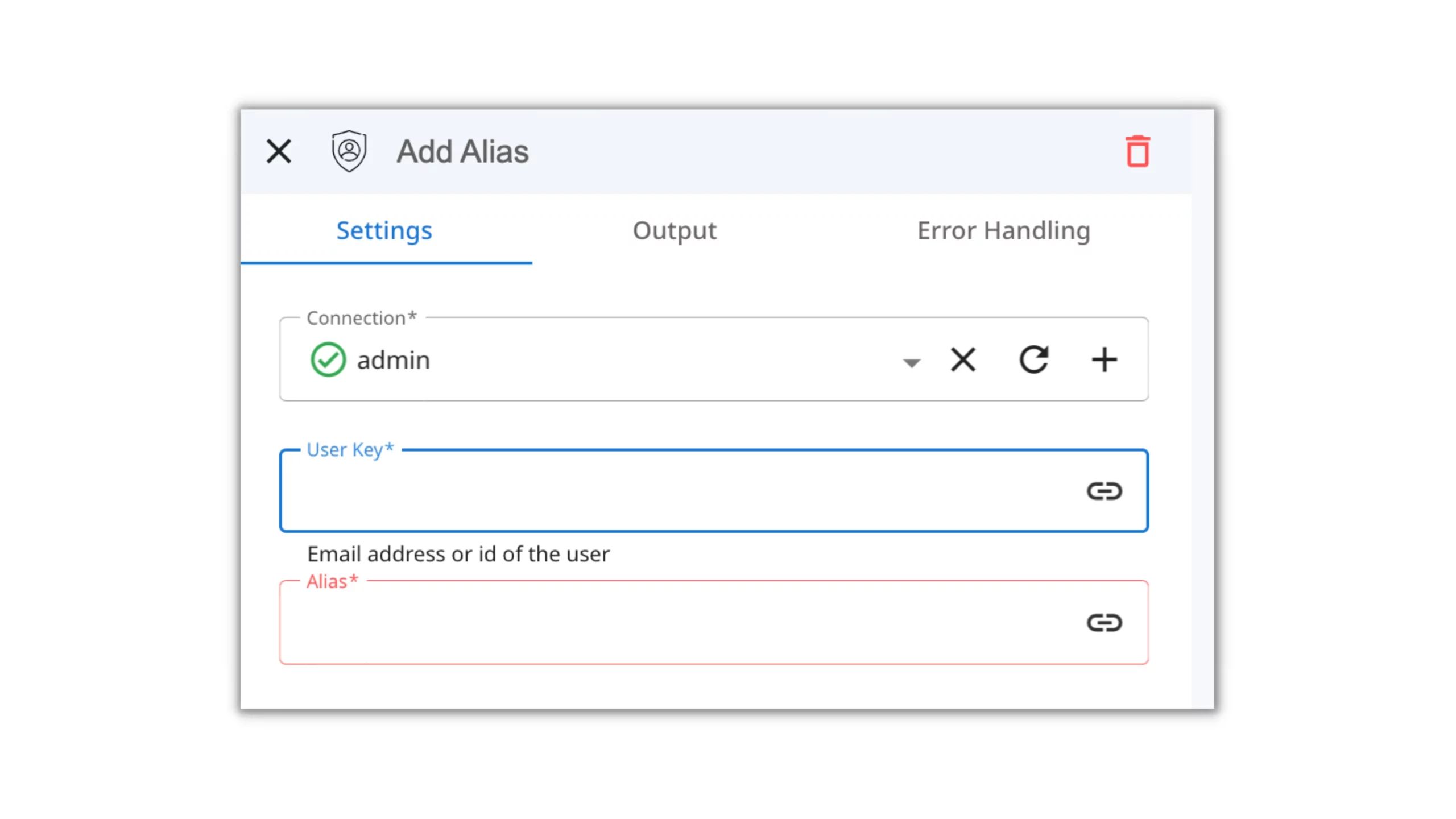
Sales and support addresses, role-based addresses, department transfers, temporary role ownership, and standardized user provisioning.
Configure and govern forwarding addresses
Approved requirement → create forwarding destination → monitor or remove when no longer needed
Forwarding can be operationally useful, but it also deserves tighter governance than a normal inbox preference. Google Workspace provides several ways to forward or redirect Gmail messages, and organizations may also need to know when users have configured forwarding that does not match policy.
An automated workflow can provision an approved forwarding address when a legitimate business need exists, retain the request and approval history, and later remove or audit the setting when the user’s role or status changes.
Zenphi’s Gmail and Google Admin actions can manage forwarding-related settings within a broader workflow rather than treating them as standalone admin changes.
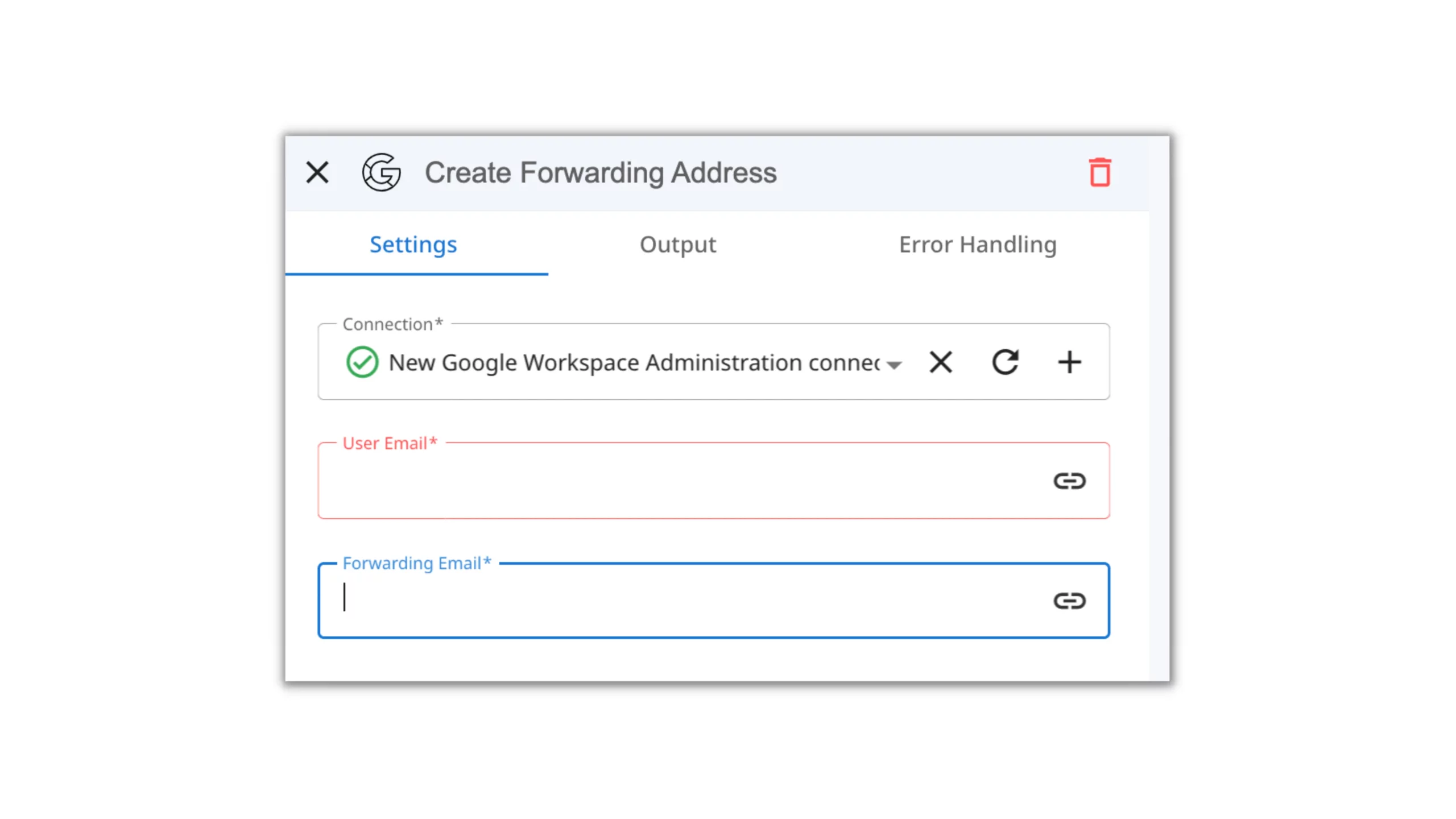
External auto-forwarding can create a data-loss path. Where forwarding is allowed, define who can request it, which destinations are acceptable, who approves it, how long it should remain active, and how the organization audits it.
The highest-value version is to make Gmail setup part of employee onboarding and role changes
These five automations become much more valuable when they are not five separate workflows. A single onboarding process can create the user, determine their role and department, configure the Gmail settings they need, provision Drive and Groups access, create tasks, notify the manager, and continue into the rest of the employee lifecycle.
The same architecture can reverse or update those settings later. A department transfer can change labels, filters, aliases, access, and signature details. Offboarding can remove delegates, disable unauthorized forwarding paths, reclaim access, and archive data according to policy.
The goal is not simply to make Gmail easier to use. It is to connect Gmail administration to the business event that should cause the change — onboarding, a role update, an approved request, a security finding, or offboarding.
If you are new to the platform, this introduction to Zenphi workflow automation explains the basic Flow, Trigger, and Action concepts. You can also get started with Zenphi directly.
Want to remove repetitive Gmail admin work from onboarding?
Bring the Gmail setup checklist your IT team uses today. We’ll show how signatures, labels, filters, aliases, forwarding, and the rest of the Google Workspace provisioning process can run as one auditable workflow.
Gmail automation for Google Workspace admins: FAQ
What Gmail admin tasks can be automated?
Common examples include updating signatures, provisioning labels and filters, assigning aliases, managing forwarding settings and delegates, auditing forwarding behavior, and connecting Gmail configuration to onboarding, role changes, and offboarding. You can use Apps Script or Zenphi for automating Google admin tasks code-free.
Can Gmail signatures be updated automatically for multiple Google Workspace users?
Yes. A workflow can use a standard signature template, combine it with employee data from Google Directory, and apply the personalized signature to selected users, departments, groups, or organizational units. To build this workflow, use Zenphi as Google Workspace-first automation solution that can connect to Google Directory natively
Can Gmail labels and filters be provisioned during onboarding?
Yes. An onboarding workflow can determine which labels and filters a new employee needs based on role or department and configure them automatically as part of the same user-provisioning process.
Can email aliases be automated in Google Workspace?
Yes. Alias provisioning can be triggered by onboarding, a role change, or an approved request. The workflow can identify the user, apply the appropriate alternate address, and record the action as part of the broader process. For consistent automation and secure workflow, use Zenphi as a Google Workspace-native tool.
Should Gmail forwarding be automated?
It can be, but forwarding should be governed carefully because external forwarding may create a security or data-loss risk. Automation is most useful when it combines approval, provisioning, auditing, and later removal of forwarding settings according to policy. You can integrate all these steps, using Zenphi