
Keragon is a strong choice when healthcare-specific integrations and EHR connectivity are the priority. Zenphi is the strongest fit for healthcare organizations running operational processes in Google Workspace and needing governed end-to-end workflows without per-run pricing. Blaze is the better fit when the primary requirement is building a custom healthcare application or patient-facing portal with workflows inside it. Gemini Enterprise is the broadest option for enterprises building and governing AI agents across data, apps, and cloud infrastructure.
What’s in this comparison
These platforms overlap — but they are not interchangeable
The phrase healthcare AI workflow platform now covers several different product categories. A clinic automating patient intake needs a different kind of system than an enterprise building a governed fleet of custom AI agents, and a healthtech company building a patient portal has different requirements again.
Purpose-built healthcare workflows and AI agents with a large library of healthcare connectors, including EHR and operational systems.
Governed workflows and AI agents that connect Gmail, Drive, Docs, Sheets, Forms, Calendar, Google Admin, APIs, and healthcare systems.
Organization-wide AI search, agent creation, agent governance, enterprise data grounding, and developer infrastructure for custom agents.
No-code creation of secure internal tools and patient-facing applications, with workflow automation, databases, AI, and healthcare integrations.
All four platforms can support healthcare workflows, but administrative automation, clinical documentation support, patient communications, and direct clinical decision-making carry different levels of risk. For workflows that affect diagnosis, treatment, eligibility, or other consequential clinical decisions, validate the specific use case, regulatory obligations, model behavior, human-review requirements, and vendor configuration before deployment.
How we selected and compared the platforms
The original version of this article drew on 2026 agentic-AI trends, practitioner perspectives, and user reviews. For this update, the comparison is grounded more directly in what a healthcare buyer can verify today: each vendor’s current product positioning, workflow and AI capabilities, healthcare integrations, security/compliance statements, and published pricing.
Each platform was evaluated on five practical dimensions: how easily healthcare teams can build workflows; whether it connects to the systems where healthcare work happens; how AI is embedded and governed; whether the platform supports HIPAA-related workloads with the appropriate contractual and security controls; and how its pricing scales as users, workflows, patients, and AI usage grow.
Healthcare AI workflow platforms compared
| Platform | Best fit | Healthcare integration | AI / workflow model | Current pricing model |
|---|---|---|---|---|
| Keragon | Best fitHealthcare teams that need EHR/EMR and healthcare SaaS connectivity. | Healthcare integration300+ connectors/tools; healthcare-specific integration focus. | AI / workflowNo-code workflows, AI Editor, agents, MCP. | PricingPublished workflows + runs + AI credits. |
| Zenphi Best for Google Workspace |
Best fitHealthcare operations centered on Google Workspace. | Healthcare integrationGoogle-native actions + HTTP/API connections to EHR and other systems. | AI / workflowDeterministic workflows with AI agents and human review. | PricingFlat organization/process pricing; no per-user or per-run fees. |
| Gemini Enterprise | Best fitLarge organizations building and governing enterprise AI agents. | Healthcare integrationEnterprise connectors, Google Cloud healthcare/data services, custom agent development. | AI / workflowNo-code Agent Designer + enterprise Agent Platform/ADK. | PricingPer seat for app; usage/token pricing for development platform services. |
| Blaze | Best fitHealthcare teams building custom internal or patient-facing apps. | Healthcare integrationFHIR/HL7, EHR/EMR, REST APIs, healthcare data sources. | AI / workflowAI-assisted app building plus visual workflow automation. | PricingMonthly platform plans + scoped implementation. |
1. Keragon — healthcare-specific workflow automation and integrations
Best when healthcare connectivity is the center of the requirement.
Keragon is designed specifically for healthcare automation. Its strongest differentiator is the combination of a no-code workflow builder with a large healthcare integration library, making it a practical option for practices and digital-health companies that need to connect EHRs, forms, communications systems, billing tools, and other healthcare applications.
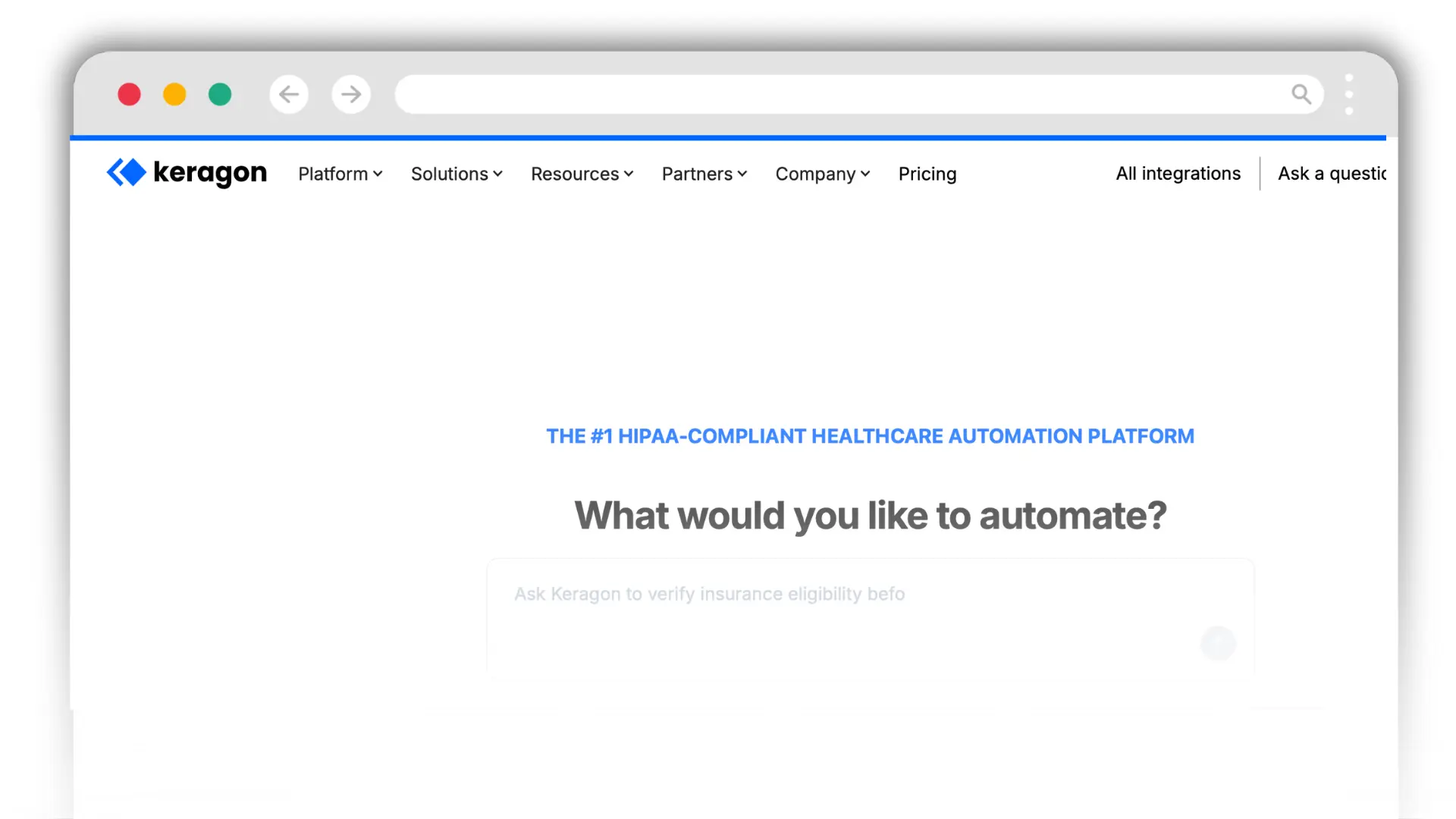
Monthly: Starter $149/month for 3 published workflows/agents and 200 runs; Professional $399/month for 15 and 2,000 runs; Scale Up $1,499/month for 100 and 20,000 runs. Annual billing reduces the effective monthly prices to $99, $269, and $995 respectively. AI credits are included, with additional usage structured by plan.
2. Zenphi — governed AI workflows for Google Workspace healthcare teams
Best fit when Gmail, Drive, Docs, Sheets, Forms, Calendar, and Google Admin already sit at the center of operations.
Zenphi is built around organizational workflows rather than isolated AI prompts. Healthcare teams can combine deterministic process logic with AI steps for document extraction, classification, summarization, or analysis, then continue into approvals, Google Workspace actions, API calls, notifications, and human review.
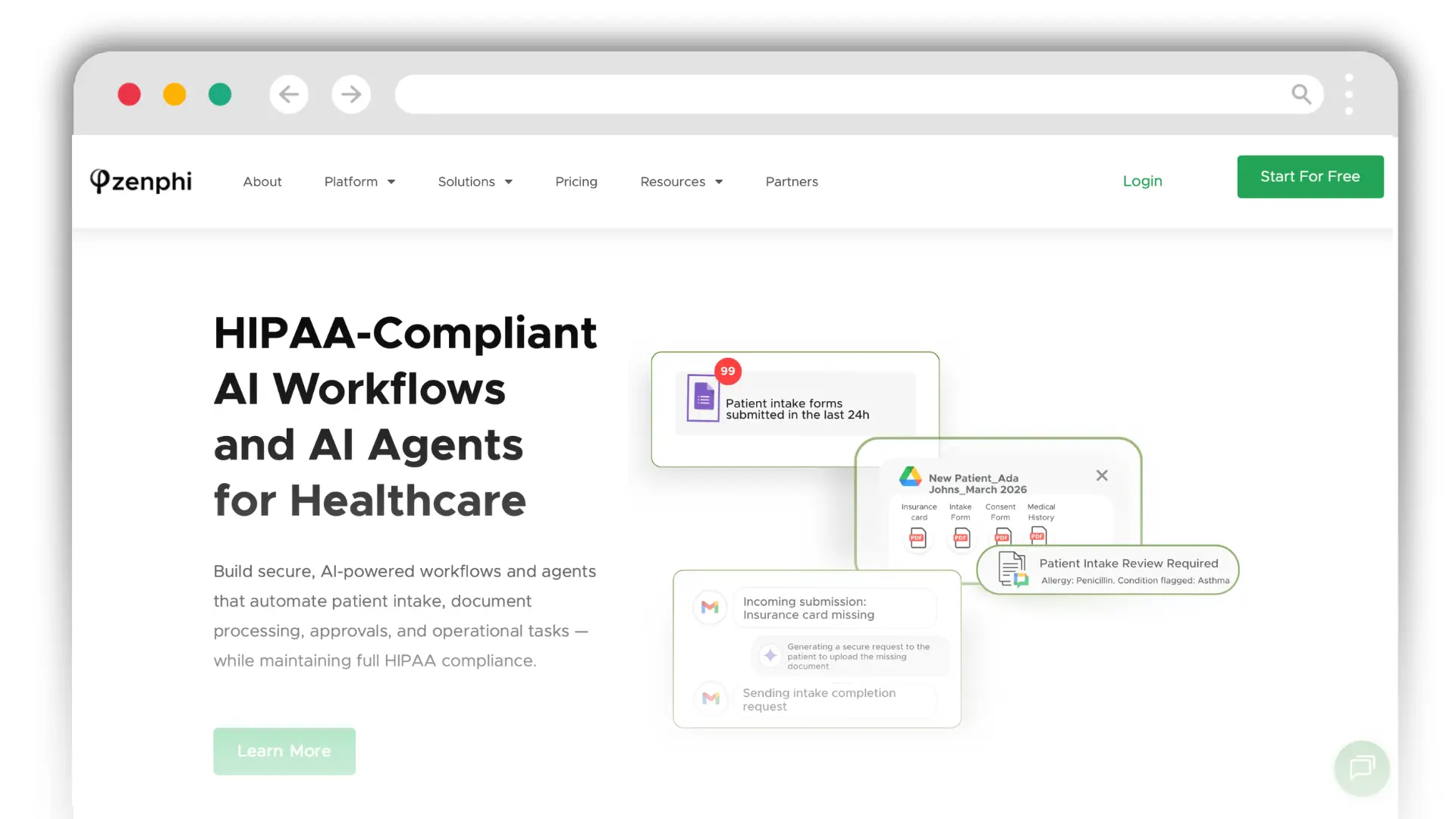
Zenphi uses flat organization/process-based pricing. Current plans include Pro (10 automated processes), Ultimate (30), and Enterprise (unlimited processes subject to plan terms). There are no per-user or per-workflow-run charges. AI document processing can be added according to processing volume.
CIT Clinics used Zenphi to connect Google Workspace and Zoho across patient onboarding and related operations. Current Zenphi case material reports approximately 18 minutes saved per patient intake and standardized data across the process.
Read the CIT Clinics case study →Running healthcare operations on Google Workspace?
Bring one process — patient intake, referrals, document handling, incident reporting, staff onboarding, credentialing, approvals, or another workflow. We can map where AI belongs, where human review belongs, and how the process can run across Google Workspace and your healthcare systems.
3. Google Cloud Gemini Enterprise — the broad enterprise agent platform
Best for organizations building and governing agents across enterprise data, applications, and Google Cloud.
Gemini Enterprise has expanded considerably in 2026. Google now positions it as an end-to-end system for enterprise agents: employees can use a no-code Agent Designer, while technical teams can build custom production agents through Gemini Enterprise Agent Platform and Agent Development Kit.
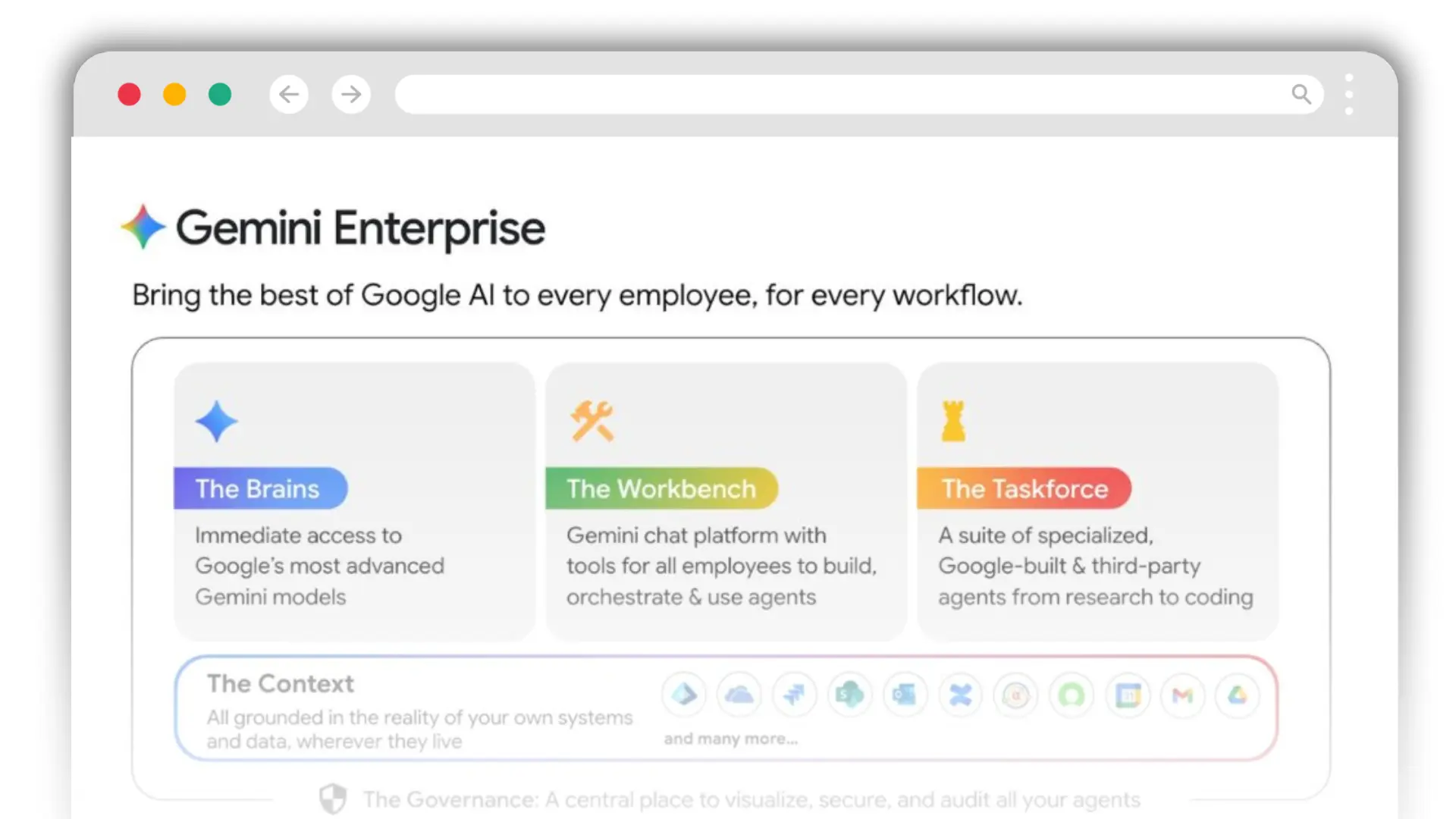
For healthcare specifically, Google Cloud describes Gemini-powered agents that can support high-volume administrative work such as summarizing complex charts and drafting documentation, grounded in organizational clinical data. The broader platform emphasizes centralized governance, agent identity, registries, gateways, observability, and secure access to connected enterprise data.
Business: starts at $21 per seat/month for teams up to 300. Standard / Plus: starts at $30 per seat/month and adds enterprise controls, third-party/custom-agent support, higher quota, and advanced compliance/security capabilities. Agent Platform development and model usage can also incur consumption-based Google Cloud charges.
4. Blaze — healthcare app building with AI and workflow automation
Best when the desired outcome is a custom application, portal, internal tool, or healthcare-facing interface.
Blaze is closer to a healthcare application-development platform than a pure workflow automation product. Teams can build internal tools and patient-facing applications with a no-code visual interface, relational database, workflows, permissions, AI features, and EHR/EMR connectivity.
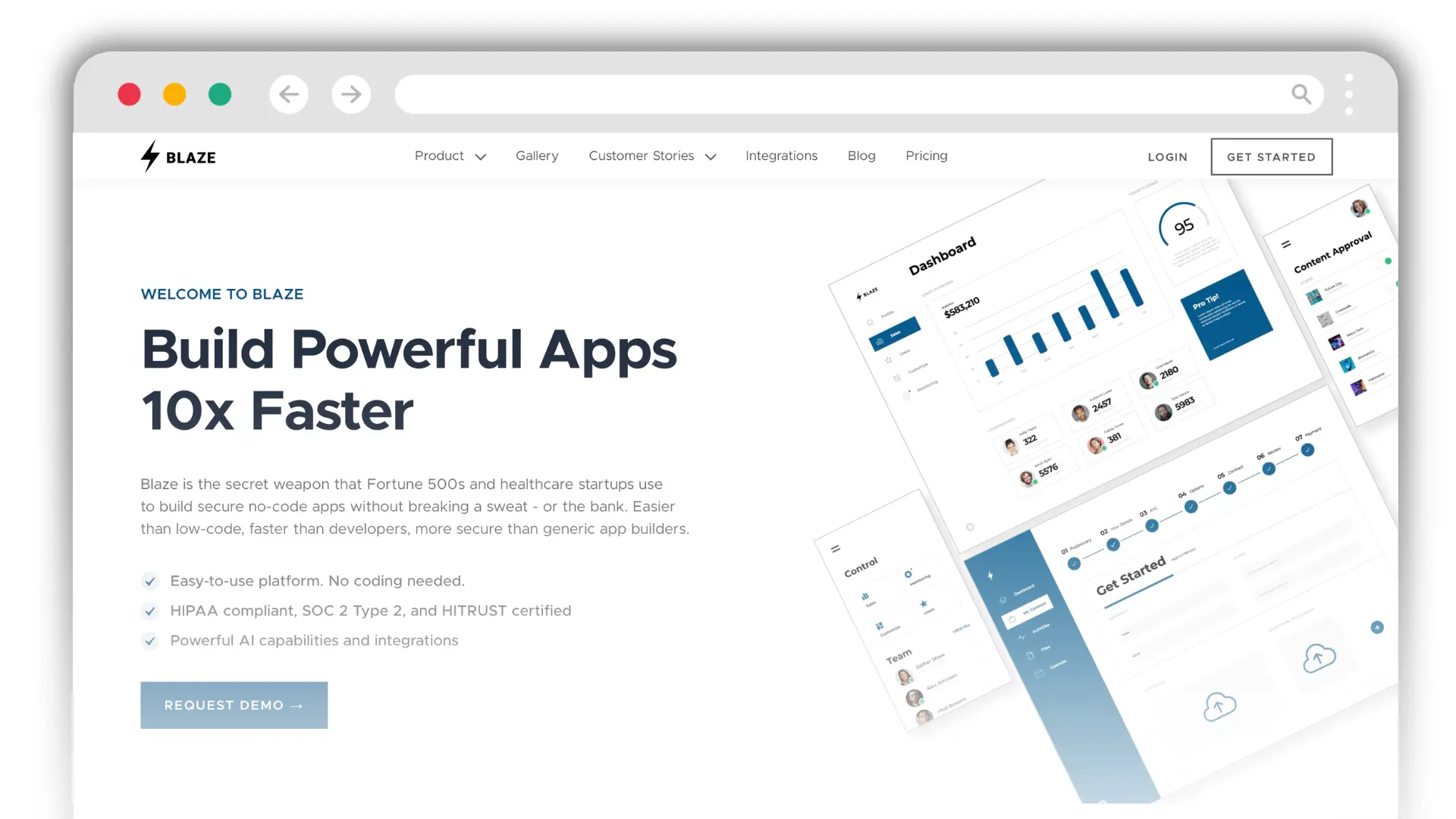
Monthly: Teams is $1,500/month for internal tools; Business is $2,500/month for internal and external apps. Annual: the effective prices are $1,350/month and $2,250/month respectively. Enterprise pricing is custom, and Blaze notes that the first project includes a scoped implementation fee.
Which healthcare AI workflow platform should you choose?
The most useful decision is based on the operating environment you already have and the type of asset you are trying to create.
It is particularly compelling for practices and digital-health teams that need healthcare-specific connectors, EHR/EMR integration, no-code workflow building, and a healthcare-focused AI/MCP layer in one platform.
If the process lives across Gmail, Drive, Docs, Sheets, Forms, Calendar, Google Admin, and connected healthcare systems, Zenphi provides the deepest Google-native workflow model in this group. Its flat pricing also makes it attractive for high-volume workflows where per-run costs would scale with patient or document volume.
It gives large organizations a broader foundation for agent creation, enterprise data grounding, governance, and developer-led agent infrastructure. It is especially relevant when the AI platform itself — rather than one operational workflow — is the strategic layer being standardized.
Blaze is strongest when teams need a patient-facing portal, internal healthcare app, workflow-heavy operational interface, or custom product that combines UI, data, integrations, and AI in one no-code environment.
A vendor’s BAA, certification, or HIPAA-ready infrastructure does not make a healthcare organization’s implementation compliant by itself. Confirm the exact product edition, data flows, model configuration, retention, access controls, audit requirements, subprocessors, human-review design, and contractual scope for the workflow you plan to deploy.
Want to compare your healthcare workflow against Zenphi?
Share the process, the Google Workspace tools involved, your healthcare systems, and the approximate monthly volume. The Zenphi team can show how the workflow would be designed and where AI, deterministic logic, and human review would sit.